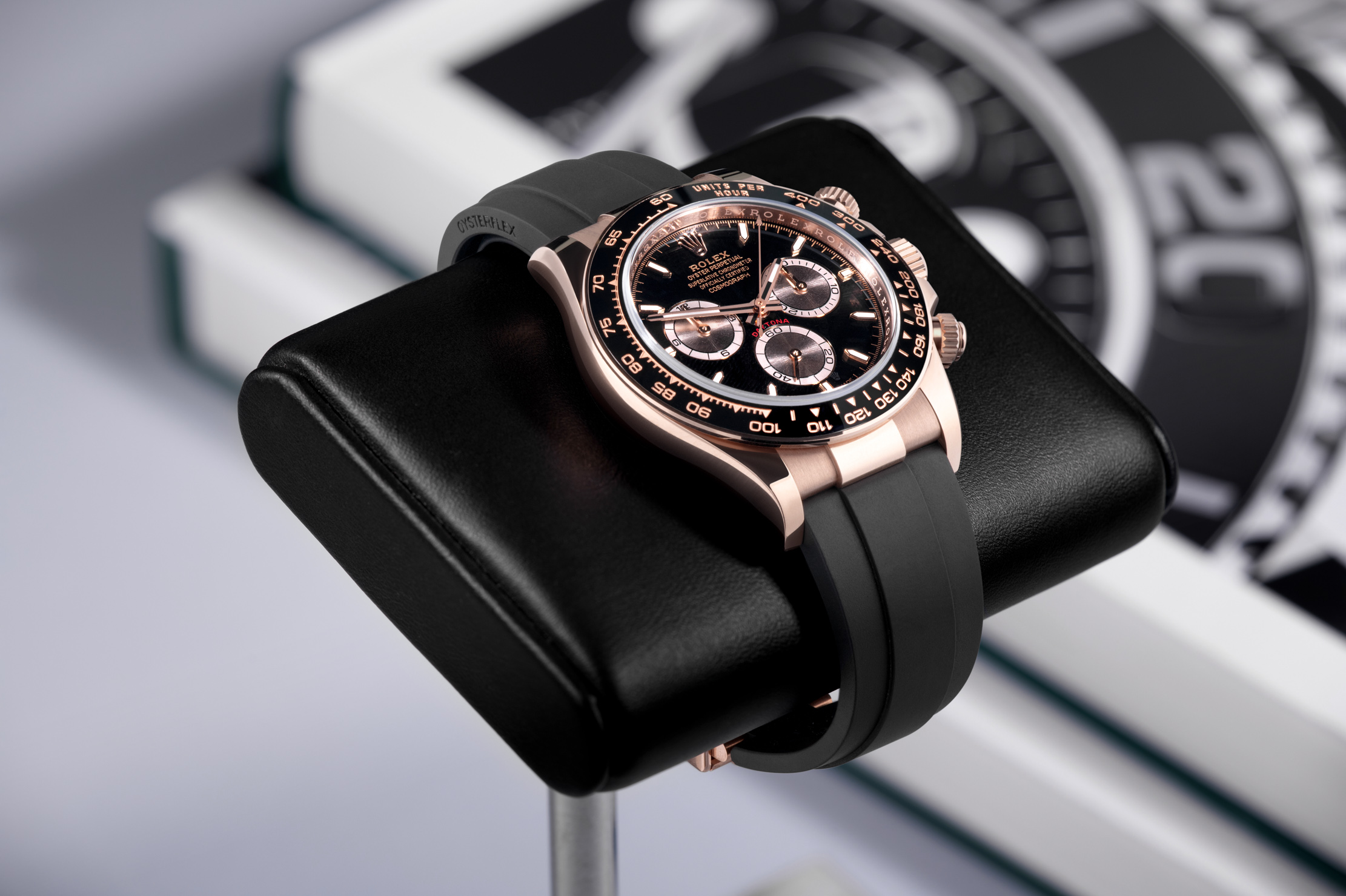
Photographer - Jack Pickerill
How Do You Photograph Luxury Watches Professionally?
To achieve a professional result photographing watches, really each step of the photography process needs to be meticulous and considered.In the already technically demanding field of product photography, watch photography is fraught with technical challenges to overcome.
The two things that will make or break your image are managing reflections and managing focus/depth of field. Ignoring one or both of these rules leads to watch photography that looks cheap and amateurish.
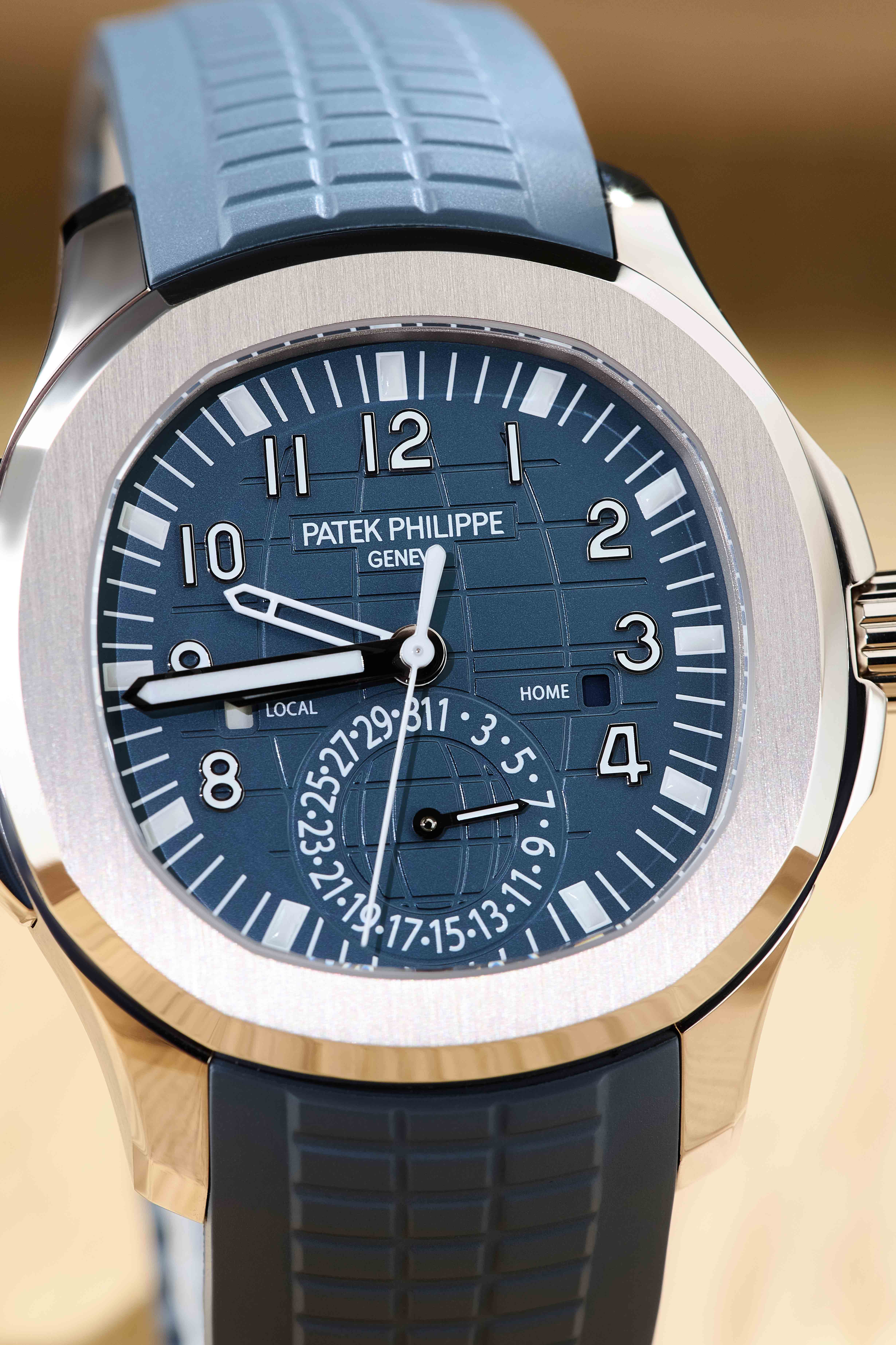
If too much of the watch is out of focus, or the plane of focus is in the wrong place, crucial details of the piece are lost. Whilst it's very much possible to achieve a successful result with a shallow depth of field, this has to done very intentionally, with an artful approach and with just the intended section of the watch in focus.
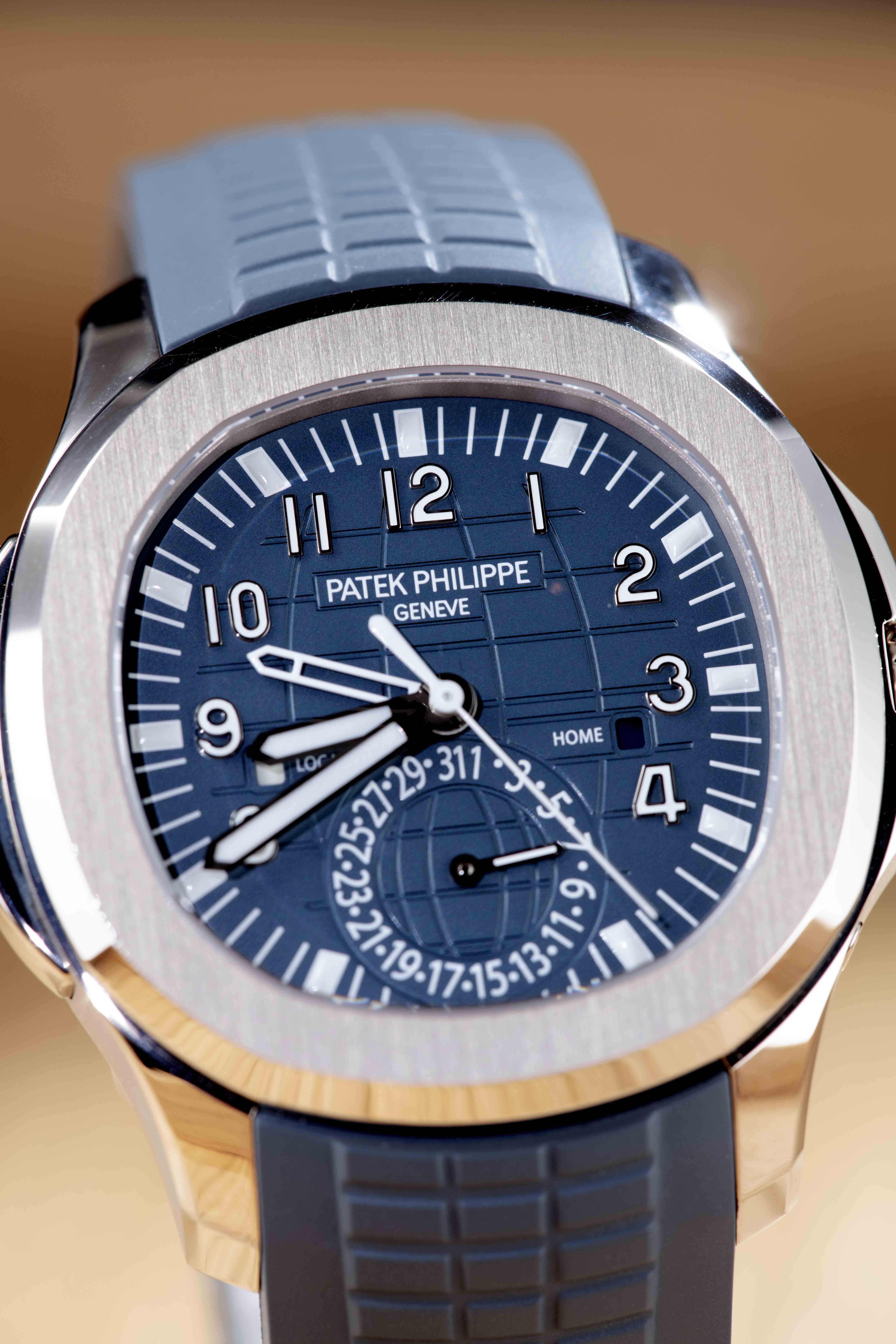
Example - Focus poorly chosen for the composition.
Photographer - Jack Pickerill
Shallow depth of field focused in the right place and drawing the eye to the watches dial
Before managing reflections
Photographer - Jack Pickerill
Same image, no retouching, after managing reflections
Preparing the watch
When getting a luxury watch ready to shoot, consider just how close up the lens is viewing the watch. Pieces that look completely clean to our eyes after a quick wipe, can appear filthy through a macro lens under hard lighting. As a precaution so to not waste time on set and in retouching, it’s best to properly and safely clean each watch before it enters the set.Cleaning
The priority on set should always be the safety of the watch. What goes through my head when I’m handling a luxury watch on a shoot, is that most of these watches are worth as much as a house, and any additional scratch or heaven forbid, damage to the function of the watch, can knock value off the sale price. How would I like it if my house cleaner knocked a hole through my kitchen wall?With that in mind then, I keep liquid use to a minimum, usually only applying to brushed finishes with stubborn smudges that wont wipe cleanly off.
The solution I use is simply distilled water, with a very small amount of washing up liquid added to it. I apply the solution to these small micro fibre spudgers that are originally intended for cleaning camera sensors.
After wiping the mark away I then dry the area with a dust blower. I should mention that during this whole process, I wear jeweller gloves to prevent making marks as I clean.
Before putting the watch into the frame, I like to have the whole image, from the lighting to the composition, ready to go. I achieve this by putting my own, cheap watch, in the frame before hand. This is so that when I set the time on the clients’ watch, I can shoot quickly and therefore maintain the position of the running watches hands in a desirable place, without having to reset the time of the watch due to set up taking longer than expected.
Setting the watch
Whilst the age old rule of watch photography is to set the time the hands at 10 and 2, on some watches this simple doesn’t make sense due to specific complications and the layout of the dial.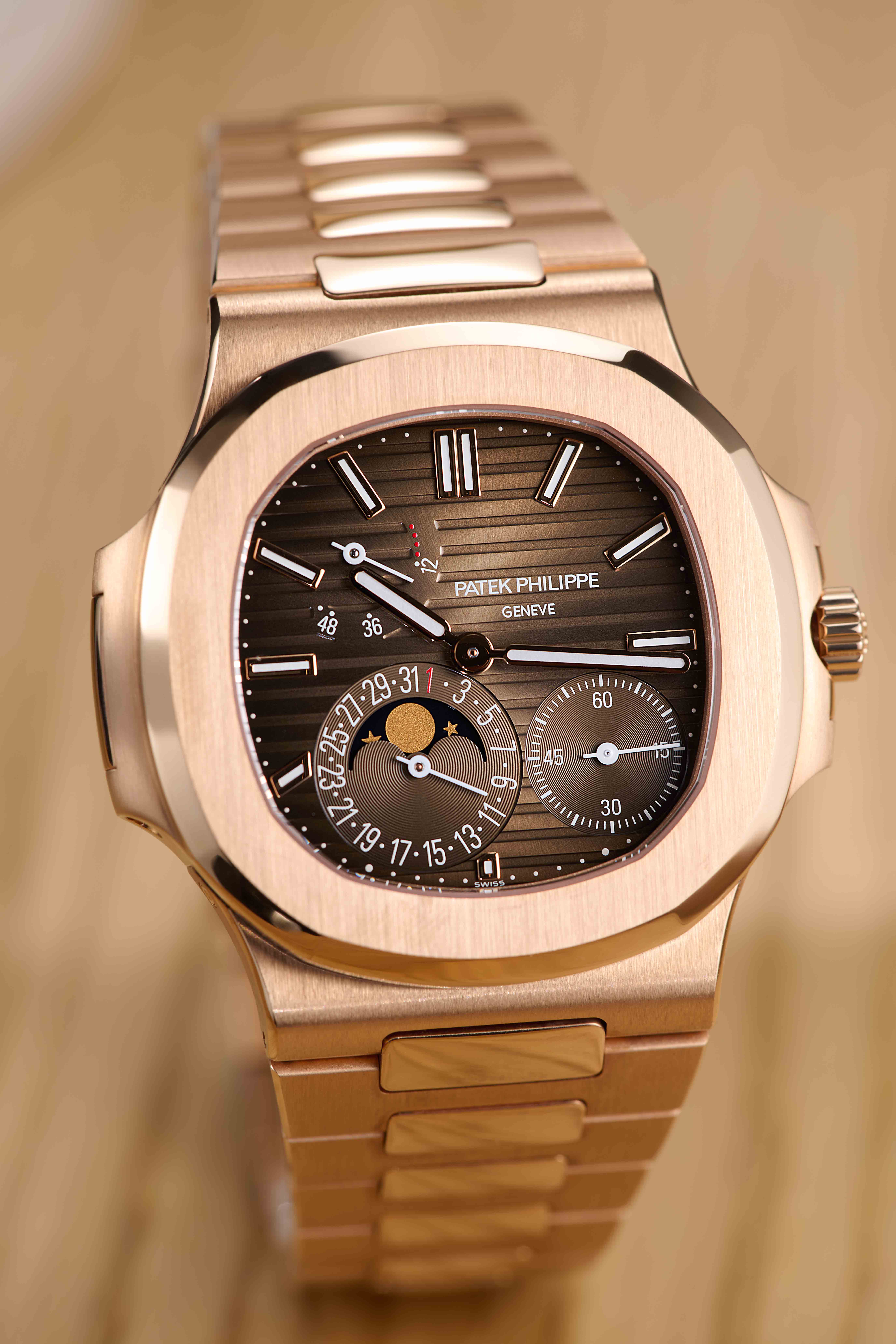
Photographer - Jack Pickerill
Hands at 10 and 2 here would obscure the dial text.
Its best not to blindly follow this rule then and instead to focus on how to best frame each part of the dial properly with the hands. Sometimes the photographer is forced to prioritise the watches branding/dial text over view of all dials and this needs to decided on a case by case basis.
Controlling reflections and lighting
Products with reflective surfaces is a niche of its own within product photography, such are skills and knowledge experience needed to shoot them professionally.
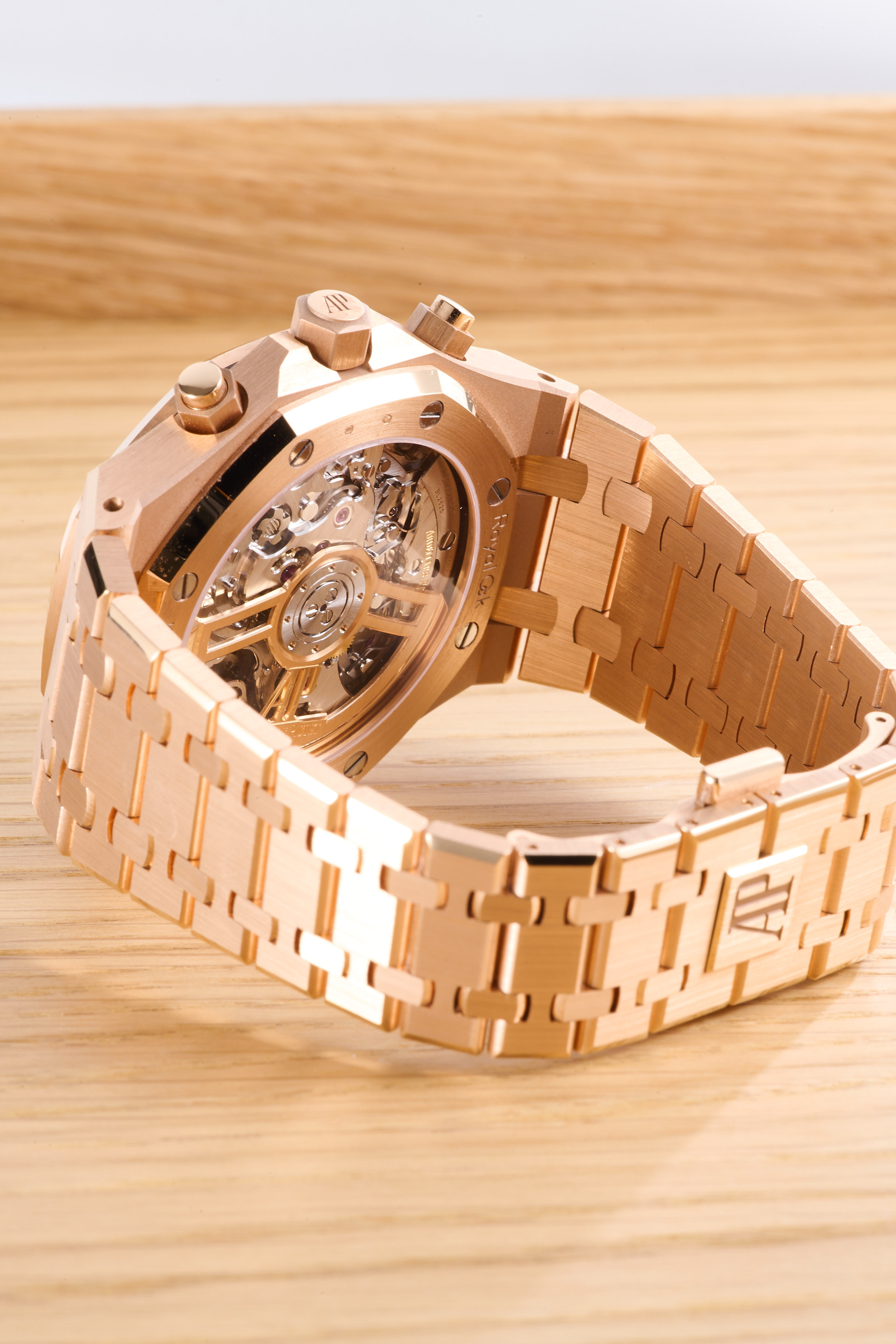
The key to shooting reflective surfaces well, is to understand that what you are shooting isnt the product itself, but the products immediate environment reflecting back into it. Therefore, if we control the environment, we control the image.
To do this we need the right tools:
1.Lee filter/trace roll paper - mounted onto an empty frame, or modelling wire bent into a custom shape
2.Black flags
3.Hand Mirrors of varying sizes.
These are all relatively cheap and simply need to be added into the watches immediate environment to achieve the desired look.
The traits of the watch that we are trying to convey here are the watches finish (gloss, mirrored, matte or brushed) and the watches colour.
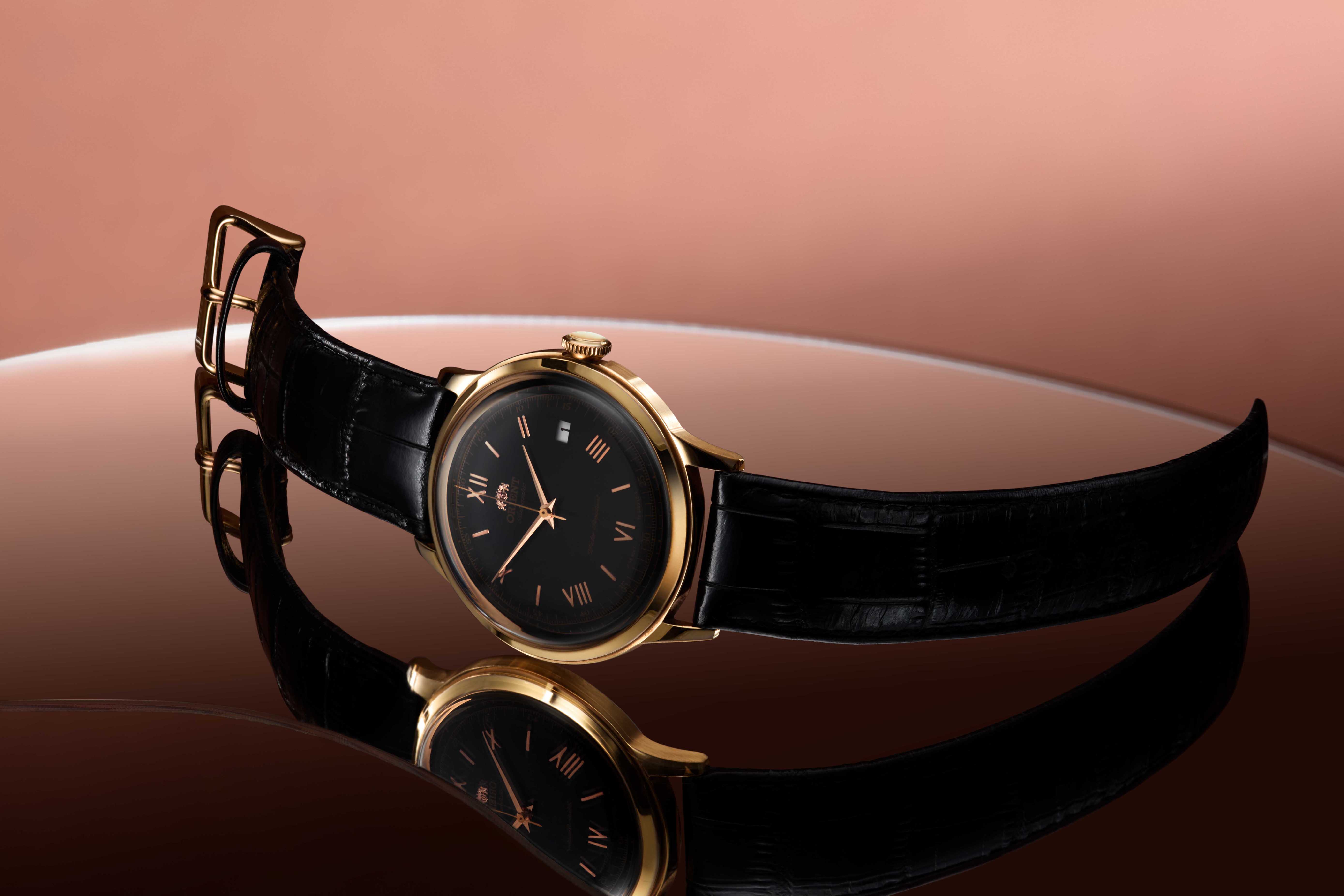
Gloss & Mirrored
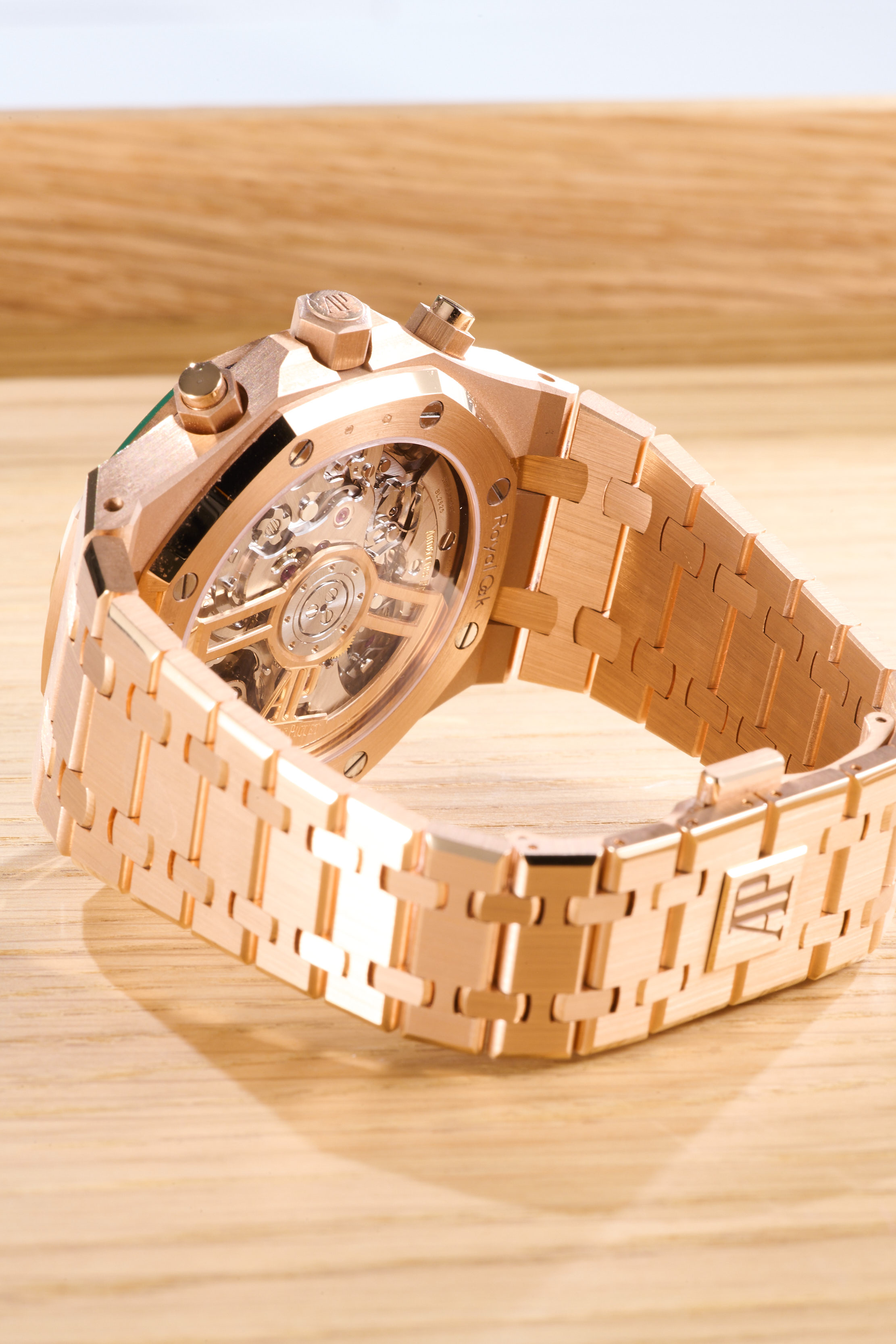
The characteristics of a gloss or mirrored surface, are a high contrast finish, containing both deep black shadows and white highlights, and sharp lines dividing these different tones up.
For our reflections to embody these characteristics we need to make sure that the environment has within it a mixture of whites (Lighting), blacks(card or black flags) and mid tones(colour matched card, trace or mirrors.
Photographer - Jack Pickerill
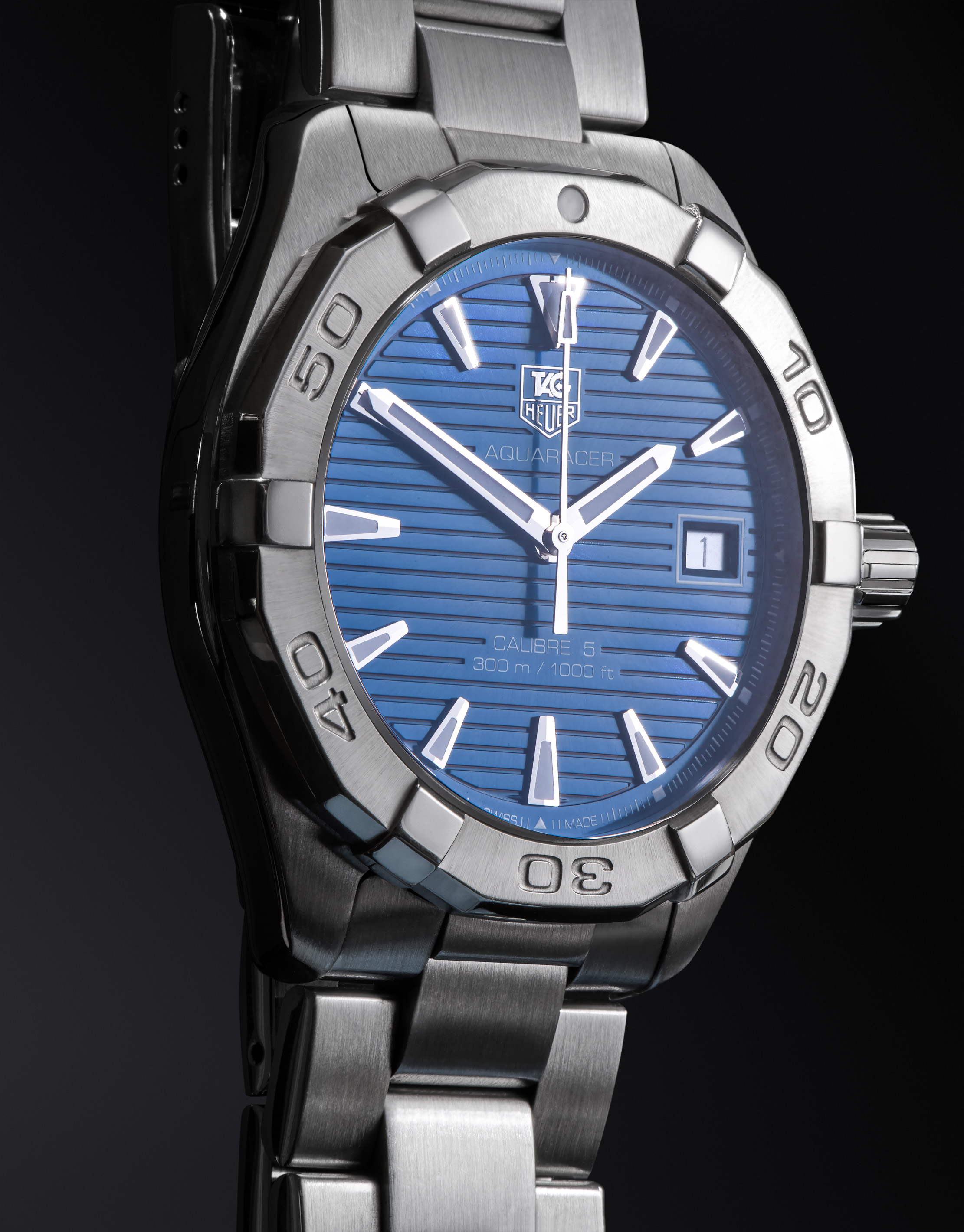
Matte or Brushed
These finishes aren’t as reflective, so the environment must be surrounded with trace and studio lighting. Photographing matte surfaces properly should show a clean gradiated light and some highlights and shadows with soft transitions between all tones.
Photographer - Jack Pickerill
Focus
Generally speaking, in watch photography we need to shoot with the lowest aperture possible in order to maximise the amount of the watch that is in perceivable focus. Whilst some photographers will tell you that you always shoot within the ‘sweet spot’ of the lens when shooting still life. In reality in the working world of product photography, this is simply too much depth of field to compromise on the day.
It will always be more important to get more of the watch to be in perceivable focus, than to get that which is in focus already, slightly sharper.
If you’re shooting watches for brands, or for dealers/watch traders, usually the more watch in focus, the better. This is in order to show more detail, or to show the full picture of the watches condition. In cases where shallow depth of field is utilised by watch sellers, usually this will be supplemented with much more imagery from different angles, in order to compensate for the blurred areas.
To truly maximise the amount of a watch is in focus, we can apply a technique known as focus stacking. This is the process of taking a series of 30-40 images as different focus point and putting them all together using software. The result is an image that could only be produced in this way, with every part of the watch in focus, from front to back. The software I use for this is Helicon Focus.
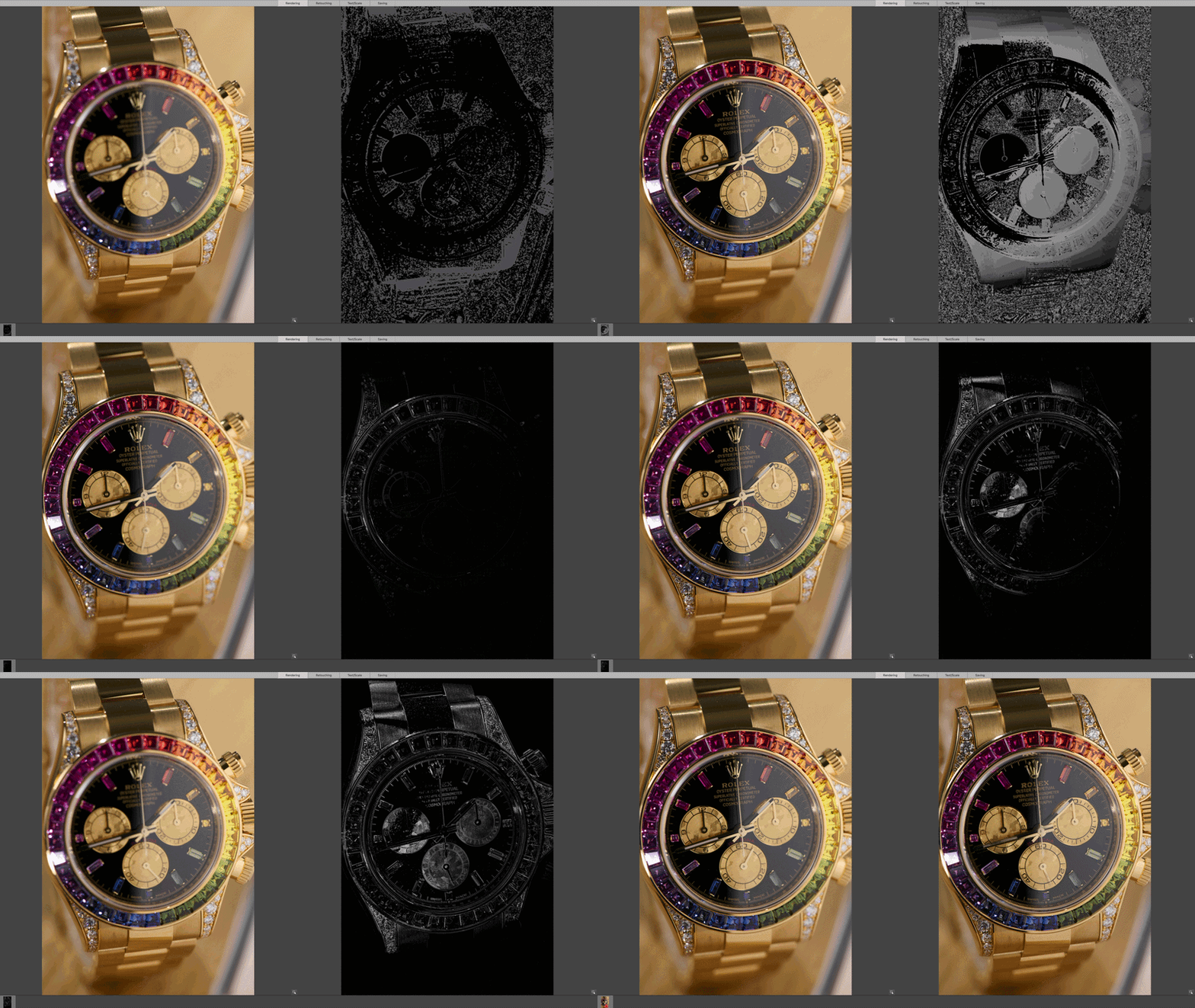
Photographer - Jack Pickerill
Focus Stacking Process
Retouching
After processing the final image, it's very important that the retoucher you are passing the work off to, knows as much about the shoot as you do. They should be knowledgeable on watch retouching specifically and what the intended finish of each piece you send across is (mirrored, brushed or matte).This is where it can be beneficial if you don’t retouch your own work, to have a retoucher on set with you, or to make notes to the products finish and colour as you go along that will be helpful in the retouching process. After shooting second hand watches consider the purpose of the image before going to retouch, if you are shooting listing images for a watch dealer, the condition of the watch to be accurate above all else.
In this case, the retouching process needs to be only the removing of any none permanent mark/dust that was missed on the day. When shooting pre owned watches for promotional content and marketing, retouching can include the fixing of damage and scratches.
The reality behind the final photograph
A big misconception about watch photography, is that the final image is exactly what the photographer see’s through the viewfinder on set. Whilst the final image may look incredible clean, just outside of frame is a mess of paper, card, mirrors and studio lighting within inches of the piece. This is why watch photography can be deceptively time consuming, especially for the inexperienced. Moving a flag by a few centimetres can alter the shape of a reflection across the entire case and rotating the watch an inch can result in the dial being filled with glare. It takes time on set to be fully accustomed to the nuances of lighting watches.What to look for in a watch photographer
When choosing a photographer to work with, I’d recommend initially, to look beyond the price range of the stock they’re shooting and look at wether or not they have a good understanding of light. Look at how they handle reflections, does that polished bezel look polished? Or does it look like grey paint? If they do have expensive pieces in their portfolio, this can also be seen as a green flag. Experience handling expensive watches can only be a good thing, but shouldn’t be seen as a basis to trust the photographer in and of itself.Above all when hiring a luxury watch photographer, you have to have confidence in the person being the camera, is this person going to have the right attitude towards watches on set? Or are they going to be like a bull in a china shop?
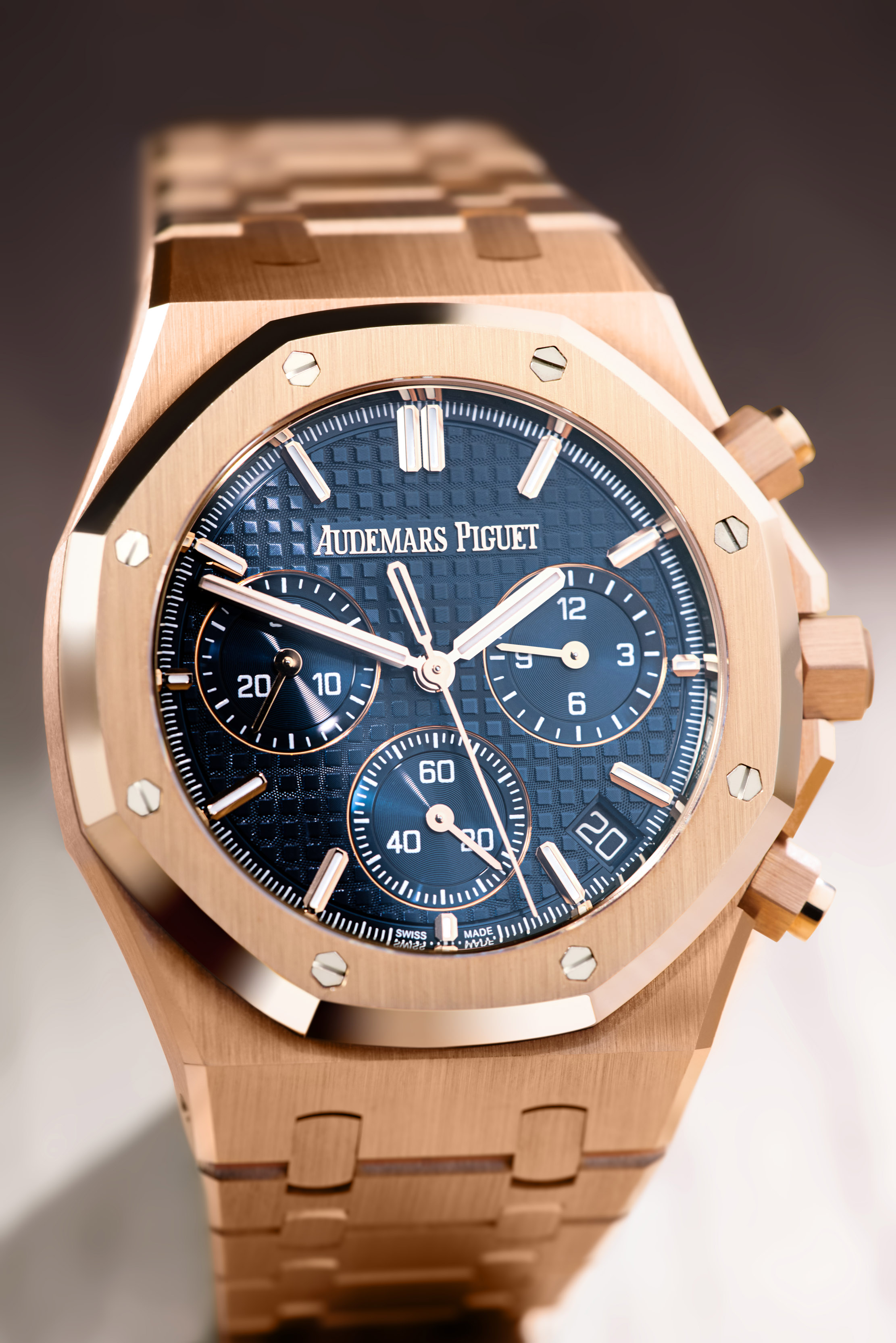
Photographer - Jack Pickerill