Table Of Contents
| Introduction |
| Chapter 1 – Foundations of Landscape Imagery |
| 1.1 – Definition |
| 1.2 – Landscape Painting |
| 1.3 – The Sublime, Beautiful and Picturesque |
| 1.4 – Romanticism |
| Chapter 2 – Inka and Niclas Lindergard – A Comparison Between the Experience of Landscapes and Images |
| 2.1 – Watching Humans Watching |
| 2.2 – Experience |
| 2.3 – Saga |
| Chapter 3 – The Man Altered Landscape and the Artist Altered Landscape |
| 3.1 – John Pfhal |
| 3.2 – Andreas Gursky |
| Chapter 4 – Landscape as Political Statement: Influencing Geographical Imagination |
| 4.1 – Edward Burtynsky |
| 4.2 – Magda Biernatt |
| Chapter 5 – Re-emergence of the Romantic Myth in Contemporary Photography – Awoiska Van Der Molan |
| Conclusion |
| Bibliography |
| Illustration List |
Introduction
In his book Landscape and Power, J T Mitchel claims that the study of landscape has gone through two major shifts; that of a modernist focus upon landscape paintings, and that of a post modern focus upon psychology and semiotics (2002, p. 1). It is my intention to explore throughout this essay, the modern and post modern shifts within landscape photography and how they relate to our political and spiritual understanding of the land. I will be discussing variances between how we interact with images and how we interact with the land, with the intention of clarifying contemporary trends within photography. Throughout this essay I will refer to photographers and artists interchangeably, as to avoid writing another essay around photography's acceptance as art. To clarify, the photographers I refer to in this essay are artists by the definition that art is anything considered in artistic context; they all are/were actively exhibiting in art galleries and museums.
Chapter 1 – Foundations of Landscape Imagery
1.1 – Definition
When writing critically about the landscape, it would be beneficial to layout the presuppositions of what constitutes a landscape. Whilst we speak of the landscape as it were an entity of its own accord, it is important to start this essay with the preface that the landscape is actually a fabrication of humankind. We as a race are responsible for the physical movement of earth that creates the landscape, and the movement of ideas over time that define how we represent it.
Both of these actions feed into each other, the way we picture the land in art and culture brings about physical changes in our environment and vice versa. A transformation of land in any aspect is the result of a personal, or collective vision. An essential part of this is a kind of picturing. This is both mentally envisioning the use or look of a space, and the physical drafting of plans that guide the building process. Curator and writer Liz Wells describes this transformation as the change from space to place (2011, p.3). Space for Wells is that which isn't known or named; distance between identifiable geographical points for example and gaps left open for specific functions. Wells likens this naming to an act of taming the landscape, stating that 'Once named we no longer view somewhere as unknowable' (2011, p. 3)
Representation of place in photography and other mediums plays an important part in this naming. Visual representation of a place through art, media or commerce is absorbed by the individual and forms his or her idea of how that place might look, function or feel, absent of any personal interaction with it. This is what Wells describes as our geographic imagination (2011, p. 3). Reaction to changes in this geographic Imagination can be the cause of physical changes to the land. Some obvious examples would be increased tourism as a result of the places use in a song or movie or environmental action taking place as the result of a successful piece of political art or photography project.
Whilst the word landscape has multiple definitions, each is concerned more with human action upon the land rather than what we may think of as a natural land formation (The idea of a land formed by only geophysical changes). The most obvious definition of this would be when the word is used as a verb. To 'landscape' an area is by definition to alter the design of an area of land. More commonly though landscape is used as a noun to describe the visible features of an area of land. Specifically, to describe the particular kind of land that's primary function is one of aesthetics. This definition is perhaps closest to the words origins in the Middle Dutch term landscap, roughly translating to landship, the condition or quality of the land. By this definition then, the landscape is a product of the cultural, historical and geological actions that occur over time and make up the visual attributes of a place. It is this aesthetics based definition that is closest to the centre of landscape art and landscape art photography.
1.2 – Landscape Painting
Photography was born into a world in which the concepts of landscape already existed and as such, were already being visually explored. Landscape photography as a genre is consequently a natural continuation of the drawings and paintings that came before it and is therefore; subject to the same critiques that were developed over centuries of artistic enquiry. In this chapter I will be looking at the origins of landscape representation and some essential terms and ideas used in the critique of landscape images.
Just as landscape photography had to develop over time into the status as an artistic genre, so did landscape painting. Up until the 1700's the depiction of landscapes in painting was limited mostly to that of a backdrop to religious stories and myth. Opportunity for the representation of actual land came mostly in the form of straight, topographical style reproductions of estates or owned land and as such, Landscape paintings ranked lowest in the hierarchy of artistic genres at the time.
Claude Lorrain was a French landscape painter educated and stationed in Italy during the forefront of the 17th century classical landscape. These painters were concerned with creating fictitious landscapes that recreated the feeling of classical Rome and Greece. Later, influence of Dutch realist painters and the steady decline in European religious art led to a rise in the present and actual landscape as an artistic subject from around 1700.
With this new focus emerged a renewed appreciation of the land. As landscapes were recognised parallel to the beauty of landscape paintings, people began to picture the land around them in similar abstracted terms. Christopher Hussey, a British author and Architect, refers to Dutch and Italian landscape artists as the only way Englishmen were able 'to receive any visual pleasure from their surroundings'. (1967, p. 2)
1.3 – The Sublime, Beautiful and Picturesque
With this new appreciation for the landscape came new words used to typify and describe it; the Sublime, the Beautiful and the Picturesque. Edmund Burke's Inquiry into the origin of our ideas of the sublime and beautiful (1757) was a book that laid out the concepts of a link between aesthetic pleasure and the subconscious. In this book, Burke puts forward his classification of the terms, beautiful and sublime; phrases that prior to Burke were being used interchangeably and without clarity.
According to Burke, a beautiful subject could be smooth, gentle, attractive or sweet and immediately excite and please the senses. Burke relates enjoyment of this set of aesthetics to an inbuilt subconscious desire to reproduce; a consequence of our necessity to survive as a species:
The generation of mankind is a great purpose, and it is requisite that men should be animated to the pursuit of it by some great incentive. (Burke 1757, p. 64)
Hussey links Burke's beautiful characteristics directly to the serpentine paths and lakes found in the English countryside at the hand of pioneering landscaper Capability Brown (1976, p. 58). Due to the popularity of landscape art throughout Europe during the 18th century; aristocrats were influenced by the art they witnessed in Italy and France and began collecting landscape paintings as a mark of status. Consequently, wealthy land owners began to mould their land according to these definitions of beauty.
Burke describes the effect of the beautiful as less powerful than that of the sublime, of which most of the book's content is devoted too. The Sublime for Burke is the experience of terror, of danger and pain (1757, p. 58). The delight in images of this sort excites our subconscious desire to survive as an individual. According to Burke, this kind of terror is painful until experienced at a proper distance, the pleasure of the Sublime is found in the relief experienced, upon realisation we aren't actually in such circumstances. (1757, p.84)
Beautiful Images excite the idea of love, of reproduction and of action in society. The sublime operates in the emotion of solitude. Such images deal with themes of contemplation, fear and the infinite. Our biological prejudice to feel pain stronger than pleasure determines that the greatest pleasures of a society, pale in significance to the greatest terrors of solitude. The sublime is a space in which the terror of the infinite is represented far enough at bay for us to be able to squint at it, to contemplate it, without the pain of clarity.
Whilst these new ideas were being absorbed into art and high culture, the physically altered European landscapes were visited by bands of upper class travellers. Prior to the popularisation of landscape imagery, the joy of sightseeing relied on a sort of reaffirmation of one's historical knowledge of a place. (Taylor 1994, p. 12)
With the decline of history painting and a move away from the classical landscape; traveller's fascination with place moved towards confirming their knowledge of the arts. Travellers began marvelling over the features of the land they deemed as 'picturesque'.
Originating from the Italian 'pittoresco', literally, the point of view of the painter; picturesque is a word that was used to describe something that one recognised as having the characteristics of a picture. This pre-visualisation of place to image took a literal term in the adoption of the Claude Glass. This device was a small tinted pocket mirror used by travellers and artists to frame and distort the landscape. Using the Claude mirror one would stand with their back to a scene and admire it's soft, simplified colours in the essence of a live painting.
Studying the landscape in this way, Burke's philosophy of the Sublime and Beautiful was tested. Travelling artist and cultural critic William Gilpin helped establish an early definition of the picturesque. In his text An Essay on Prints, Gilpin deems the differences of the picturesque and the beautiful to be 'a sense of roughness and irregularity' (1791, p. 7), as opposed to Burkes' smoothness and simplicity. For Gilpin, the picturesque was a kind of beauty that was suited to picturing, whilst Burke's beautiful catered to the actual experience. This kind of rough beauty became a way of containing or capturing the wild landscape. The picturesque traveller would sketch landscapes they encountered and present them as a sort of a cultural accolade, awarding them the reputation of being cultured and artistic (Hussey 1967, p. 2). As the picturesque vision was absorbed it became easy to recognise and repeat, resulting in formulaic, generic artwork. Picturesque images became as easy to distinguish as 'day and night' (Hussey 1967, p.2), this caused rather limited artistic dialog as paintings were deemed successful upon placement into these pre determined categories.
Quoting Hp Robinson in his 1869 essay Pictoral Effect In Photography, Author John Taylor notes that picturesque tradition thrived in the medium of photography due to the ability of the medium to exclude elements of a scene, Robinson claimed that 'Picturesqueness has never had so perfect an interpreter' as photography' (1994, P. 18). The picturesque today is often demonstrated in the work of amateur travel and landscape photographers. As in painting, picturesque photography relies on the following of pre determined rules of composition, subject matter and form. Author/artist David Bate describes picturesque composition as 'a form in which everything is supposed to be 'in the right place' (2009, p. 103). Bate relates enjoyment of this coherence to an egocentric recognition of the order it could posses.
Bate goes on to note a general dismissal of picturesque photography within the arts; this is demonstrated in the photography that frequents the pages of various amateur photography magazines. The contents of which rely upon the reader striving to achieve the technical accomplishments of published photographers through advice on the latest gear and post processing techniques. Images of this sort fall to the same formulaic fate of the aforementioned picturesque art, demonstrated by these three covers of Digital Camera magazine.

Fig.1
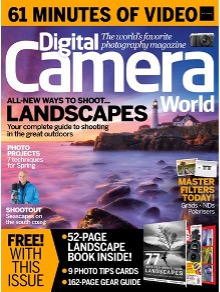
Fig.2

Fig.3
These wide angle, high saturation and high contrast images contain and stress the elements of beauty in the landscape to a hyper real state but fall quickly into cliché.
The definitions of landscape laid out across the 17th and 18th century mark the start of a shift in importance from accuracy to aesthetic. Christopher Hussey asserts that the picturesque era enabled people to 'feel through the eyes' and acted as a prelude for Romanticism (1967, p. 4).
1.4 – Romanticism
Romanticism refers to a period of time in which societal and artistic ideas centred around dismissing the rationalist principles of the 18th century enlightenment period; a century in which technical innovations led to the development of industry, commerce and urbanisation.
As society moved away from the landscape, a desire emerged to return to it. Landscape in the arts went from being the conquering of nature by man to the conquering of man by nature. 19th century romantic landscape paintings were fixated on the glorification of nature; specifically, a powerful, divine and dangerous nature, seen as a direct manifestation of god. Landscape painter JMW turner frequently painted seascapes to represent the force of nature and humanities inability to contain it. Turner's paintings were powerfully emotive and expressed an ambiguous, atmospheric style; spontaneous when compared to the meticulous and systematic paintings of Claude Lorrain.
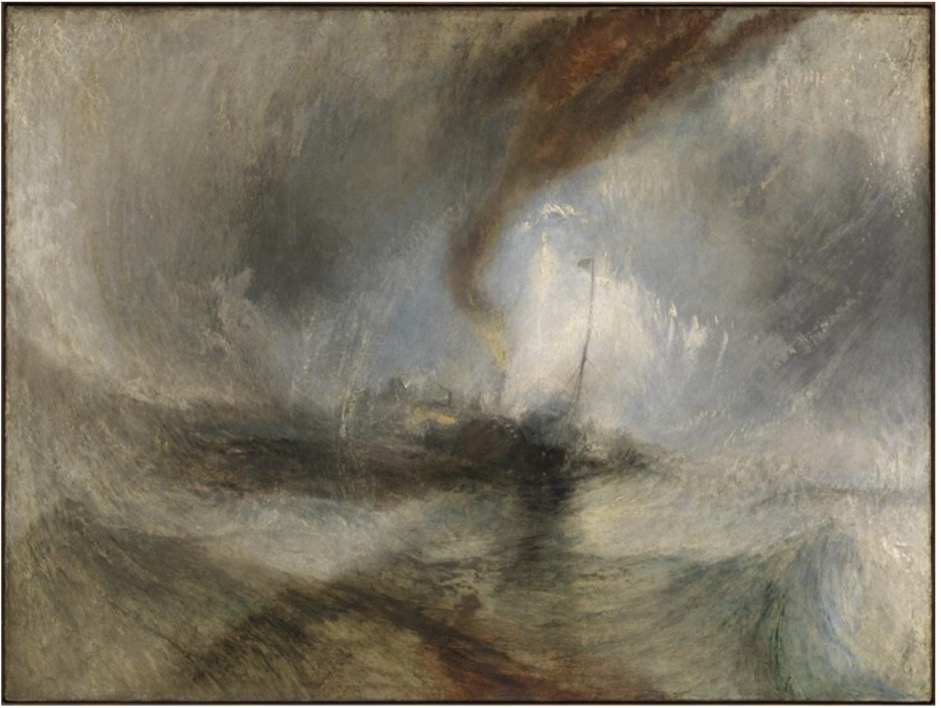
Fig. 4 – Snow Storm - Steam-Boat off a Harbour's Mouth, JMW Turner (1842)
Snow Storm - Steam-Boat off a Harbour's Mouth is a prime example of Turners expressionistic style. In this scene a powerful storm consumes the canvas. The sky and sea merge together and surround the composition forcing the viewer into an experiential perspective in the thick of the storm. The wind and sea circle round the composition, leading the viewer into the middle of the storm in which a steamboat is being thrown around at the mercy of the waves. This steamboat symbolises industrialisation and the inferiority of man against the power of god. In line with Burkes philosophy of 'A clear idea is another name for a little idea' (1757, P. 57). Turner paints this storm with a sublime ambiguity that resists singular interpretation.
Whilst the enlightenment period taught ethics of emotional restraint, romanticism was based on emotional freedom and imagination in the arts. In Turners paintings, and in the paintings of German artist Caspar Friedrich was a sublime uncertainty, a contemplation of the infinite that Burke deemed as the most emotionally stimulating.
Paintings made during the romantic period continue to influence the work of landscape photographers today. The rest of this essay will be dedicated to showing the ways in which these themes have continued in photography and in what ways they have evolved alongside geological and societal changes.
Chapter 2 – Inka and Niclas Lindergard – A Comparison Between the Experience of Landscapes and Images
2.1 – Watching Humans Watching
This next section will revolve around the works of Inka and Niclas Lindergard. The Lindergards are contemporary photographers that work exclusively within the landscape. The couple's 2011 series Watching Humans Watching/Saga Is a photo book that weaves together the pairs two concurrent projects. Watching Humans Watching is a project that documents tourists interacting with landscape sights around North America and Europe. Within this series people are treated as a part of the landscape. Often small in the frame and facing away from the camera, human subjects blend into their surroundings; their position and outfits merging perfectly into the composition and complimenting the existing colour palette of the image.
People were frequently added to landscape paintings during the romantic era to signify mans inferiority at the feet of nature, an example of this is Caspar Friedrich's The Monk By The Sea.
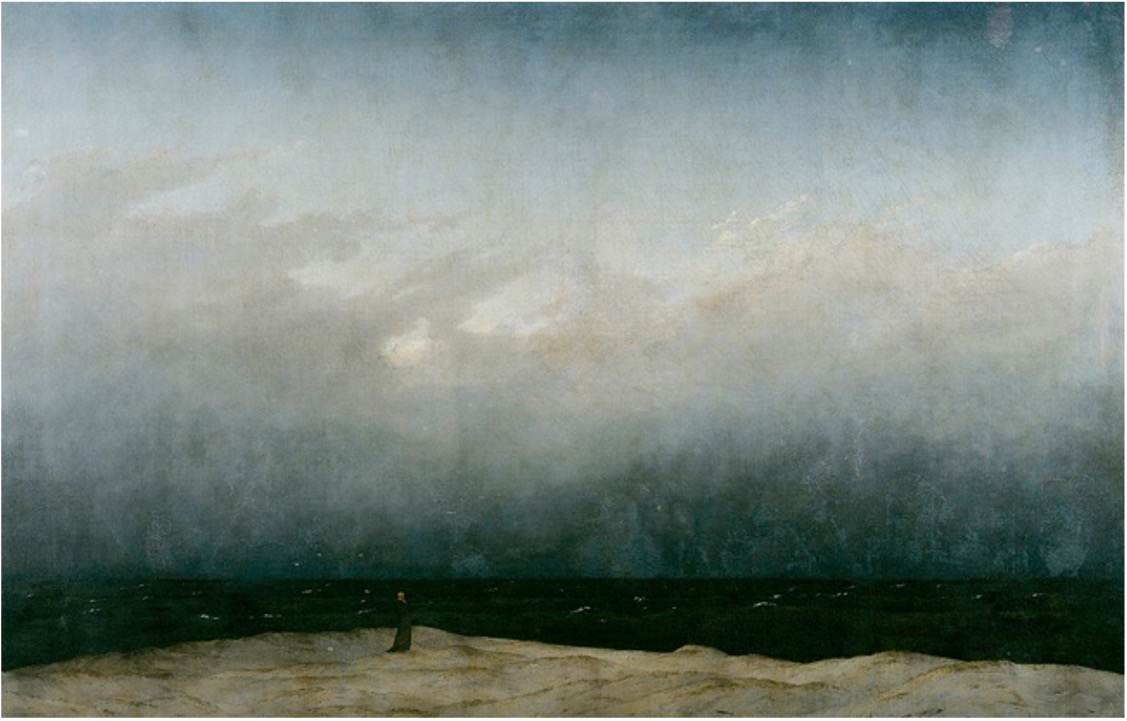
Fig. 5 – The Monk By The Sea, Caspar Friedrich (1809)
The viewers eye is immediately drawn to the bottom of the frame where a solitary figure gazes out into the ocean. Small and indistinguishable in the image a man is surrounded by flowing clouds and a dark sea. The scene is obscure as the sky progresses from a pale blue into a deep blue-green, leaving the time of day as unclear as the weather. The distance is endless and as we witness the figure staring out into the infinite, we are invited to do the same.
In her book Landscape As Photograph (1985) Estelle Jussim relates Friedrich's depictions of 'faceless individuals' to the embodiment of Ralph Waldo Emerson's "Transparent Eye-ball"; a philosophical metaphor for a person absorbing the elements of their surroundings and becoming one with nature (1985, P. 39). Here, the ego of the monk, and of the susceptible viewer, is confronted by the ineffable universe. Friedrich's lone character possesses a spiritual demeanour, even before learning of the title, his upright pose and black gown affirms him a position of reverence in the image that isn't held by the tourists of Watching Humans Watching.
The Lindergards offer us a similar narrative in their series. Exploring the connection between humans and the landscape, the Lindergards include themes of tourism and the photographic cliché into compositions that resemble Friedrich's.
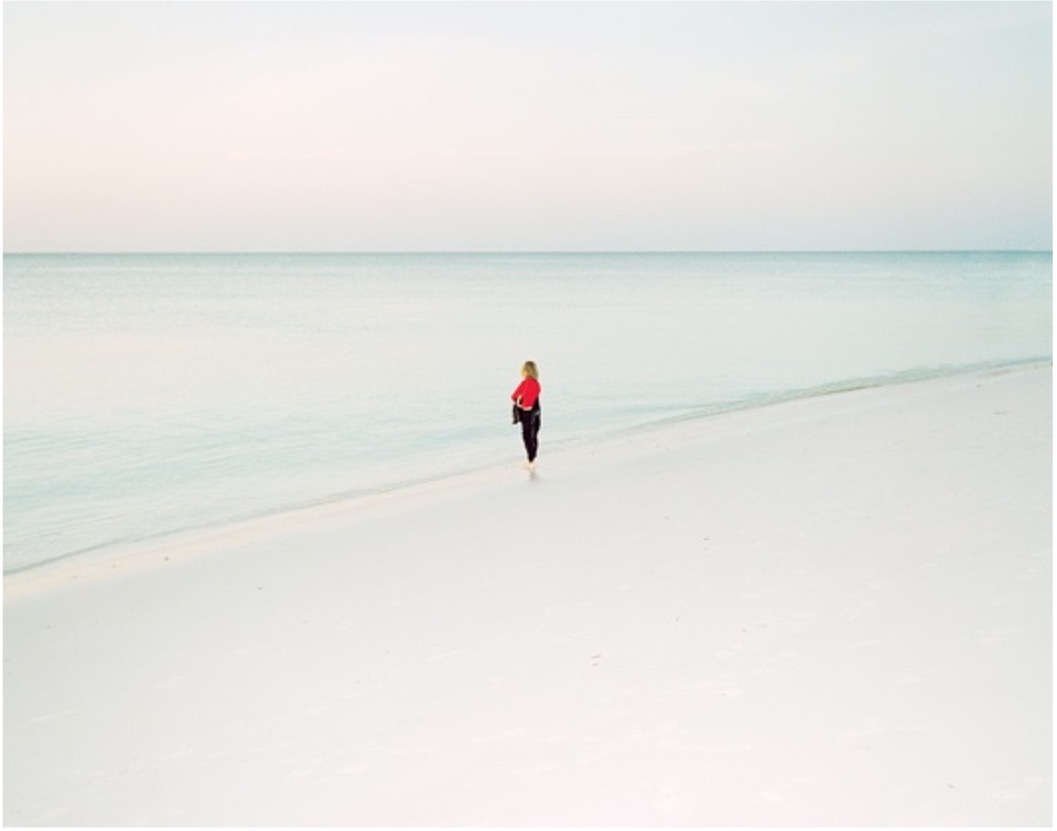
Fig. 6 – Untitled Image, from Watching Humans Watching series, Inka & Niclas Lindergard (2011)
Whilst the women in the Lindergards image (fig. 6) looks out in a comparable position amongst the land, sea and sky; the composition is inclusive to the subject. Friedrich's Monk stands at the bottom of the frame witnessing an image of his own, a vast and endless sea, merging into a clouded, uncertain sky. Instead, A woman in red stands in the middle of a harmonious composition; beach, sea and sky unite in the beautiful form of a pastel colour palette. The clear dividing lines of each element flatten and abstract the image, leaving us, if it were not for the tourist, with 3 blocks of colour, comparable to a slightly skewed Mark Rothko painting. The outline of the beach leads our eye across the composition and to a woman in red that interrupts the two dimensional form of the image, holding the scene to a reality. As noted by Estelle Jussim, the addition of a person into an image removes the landscape from an abstraction that leaves the landscape to exist in 'some iconic eternity' (1985, P .31). The photograph reveals more detail in the subject than in Friedrich's faceless monk, therefore we can see that the subject crosses her arms whilst engaged momentarily with the view in front of her. The difference in attention between the two images we could assign to each of Norman Bryson's definitions of 'The Gaze' and 'The Glance'. Bryson terms the glance as 'a furtive or sideways look whose attention is always elsewhere' (1984, p. 94). The women in red can't embody Emerson's 'Transparent eyeball', for the interference of additional tasks - the holding of a coat, distract her from the experience. Alternatively, The Monk by the sea performs Brysons definition of the gaze: 'prolonged, contemplative, yet regarding the field of vision with a certain aloofness and disengagement, across a tranquil interval' (1984, p. 94)
Photographing the landscape and the individual, the Lindergards also reference the type of photography popular among tourists; in which, a person stands alongside a particular known landmark or a sunset and poses as if to assert evidence of their experience.
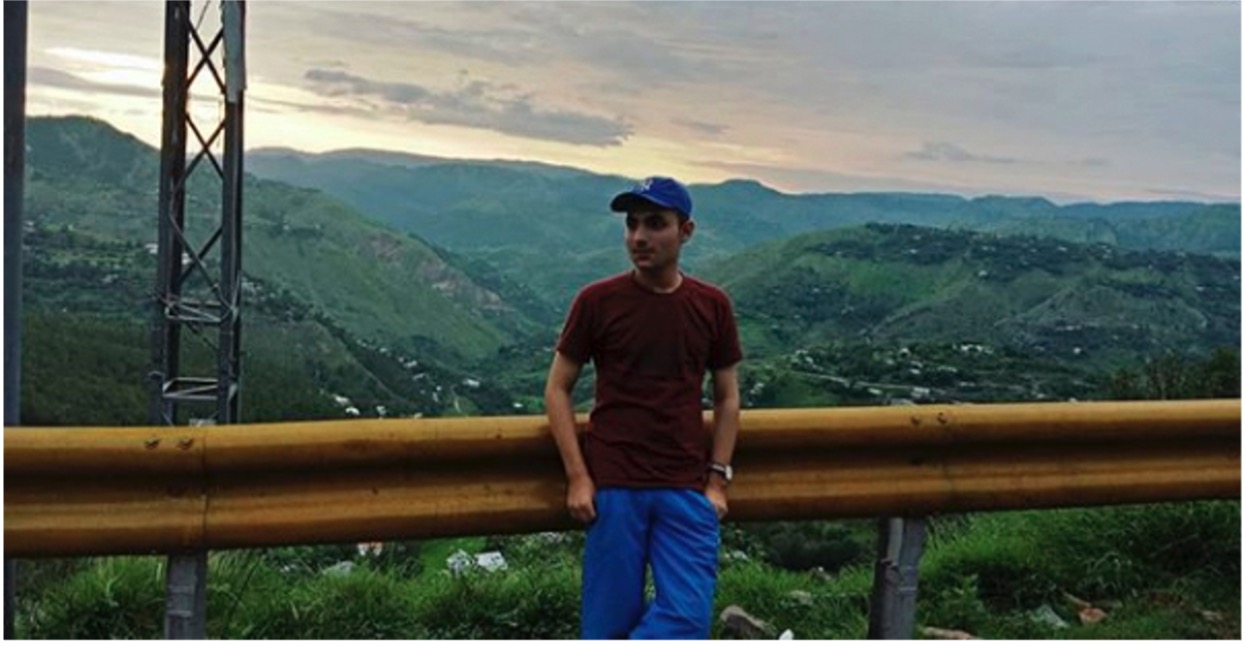
Fig.7
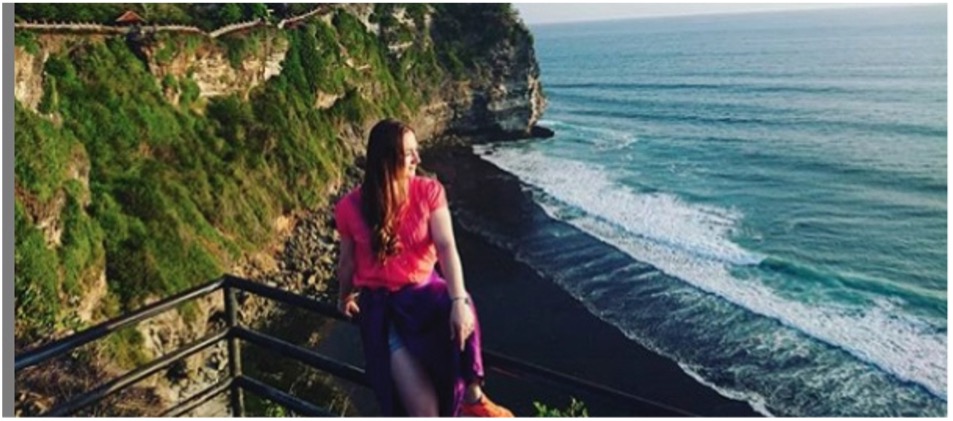
Fig.8
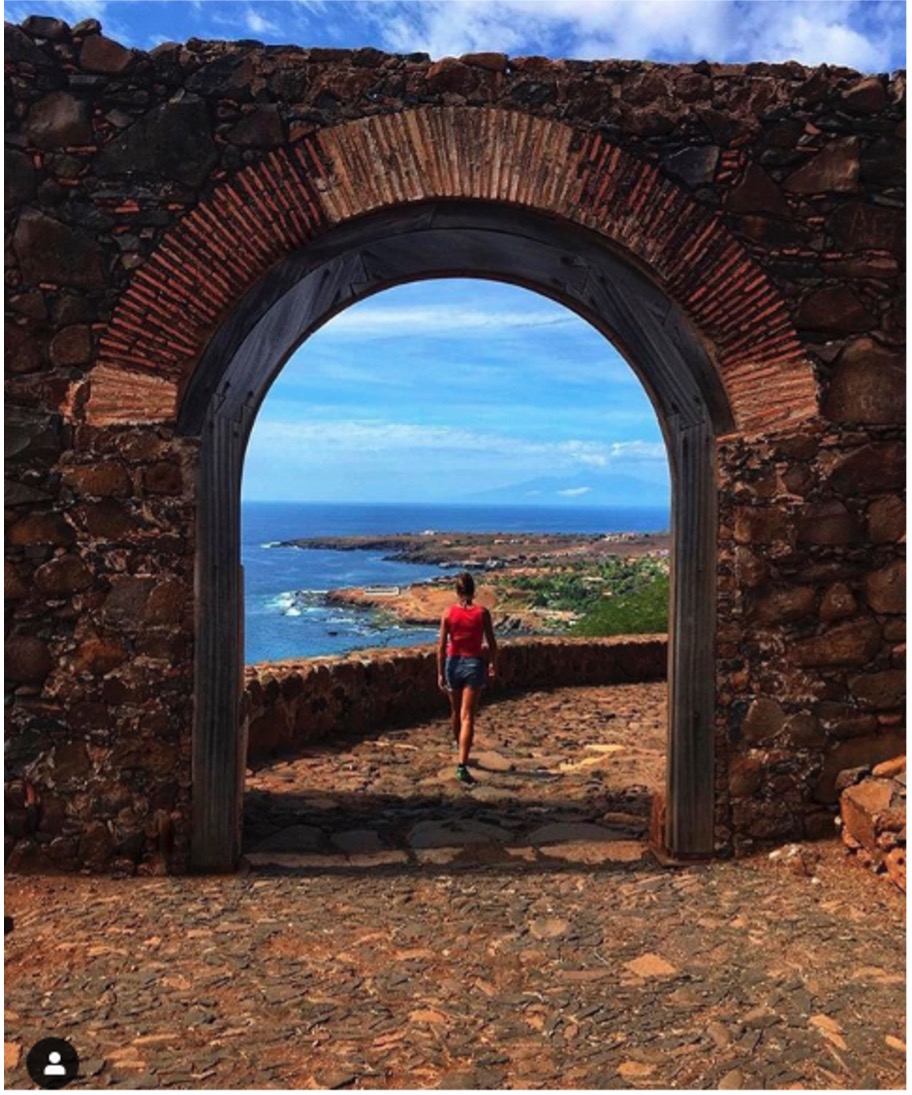
Fig.9
Figs 7,8,9 – found under Instagram #travel
Similar to the picturesque sketches of the 18th century, although accentuated through rise of the networked image; the appeal of this type of tourist photography is a visual proof that the person in the frame has travelled and experienced the natural beauty of a foreign landscape. John Taylor alludes to the pleasure found in tourism in his book 'Dream of England' in which he relates touring to a shift in our perception of time. 'In its ideal form, touring is like dreaming. This suggests a period which is magical and free of volition.' (1994, p. 2). Shared using the hashtag #travel on Instragram, the images above portray a re-enactment of the feelings John Taylor describes. As the subjects turn away from the camera seemingly unaware, they are saying to us, they are carefree and experiencing the landscape away from the ongoing activity of everyday life. The irony in images of this sort is of course our knowledge that they orchestrated and staged the scene – an activity that takes away from the tranquil, pure experience they claim to be having. Omitting the spiritual grandeur of Monk By The Sea, yet transcending the formula of a layman's holiday photo, the Lindergards toe the line between photographic art and cliché. The Lindergards picture their subjects as if they are part of the landscape, whilst their subjects picture the landscape candidly, through the act of looking. Consequently, Watching Humans Watching engages in a sort of meta wonder – we marvel at the artist's aesthetic representation of people marvelling the landscape.
Within Watching Humans Watching/Saga, writer Camilla Arlin interprets this relationship in the terms of a hunting analogy. Tourists hunt landscapes as if it were game, they 'shoot' with cameras instead of guns and capture the tamed landscape photograph as a trophy of their efforts (2011, P. 93-95). The Lindergards; themselves engaged in the same sightseeing tours, detach from the activity of capturing landscapes and instead record subtle ironies of the endeavour. In an online interview with C-Print Journal, Niclas Lindergard speaks of making Watching Humans Watching:
You realized at a certain point that much of the way they acted, for example dressing up in certain attire, is resulted by what they've priory seen in images and photographs that in part dictate their expectations and idea of the experience they're about to have.' (C-Print, 2011).
Here, Niclas Lindergard describes the influence images have on experience akin to Well's Geographic imagination. The people in this series are dressing according to the experience they believe they will have; an impression developed by how the place or experience has been depicted and described to them. In Watching Humans Watching, tourists are pictured at the point these expectations have led up to. The experience performed in posed travel photography, The Lindergards capture candidly, revealing a truer picture of the relationship between humans and landscape.
The contemplation of artwork (landscape or otherwise), also falls to the same expectation led experience. Experiencing a renowned piece of artwork such as the Mona Lisa, the viewer goes in with a knowledge of the paintings beauty and fame. These pre-conceived notions bring physical changes to how we experience looking, in extreme cases leading to the temporary psychosis informally known as 'Stendhal Syndrome'. Named after 19th century Author Stendhal, this condition relates to the authors documentation of multiple people fainting in awe of and beauty of Florentine art.
Looking at renowned artwork holds a kind of cultural weight similar to the experience of foreign land. As such the same kind of Instagram performance exists within galleries and museums.
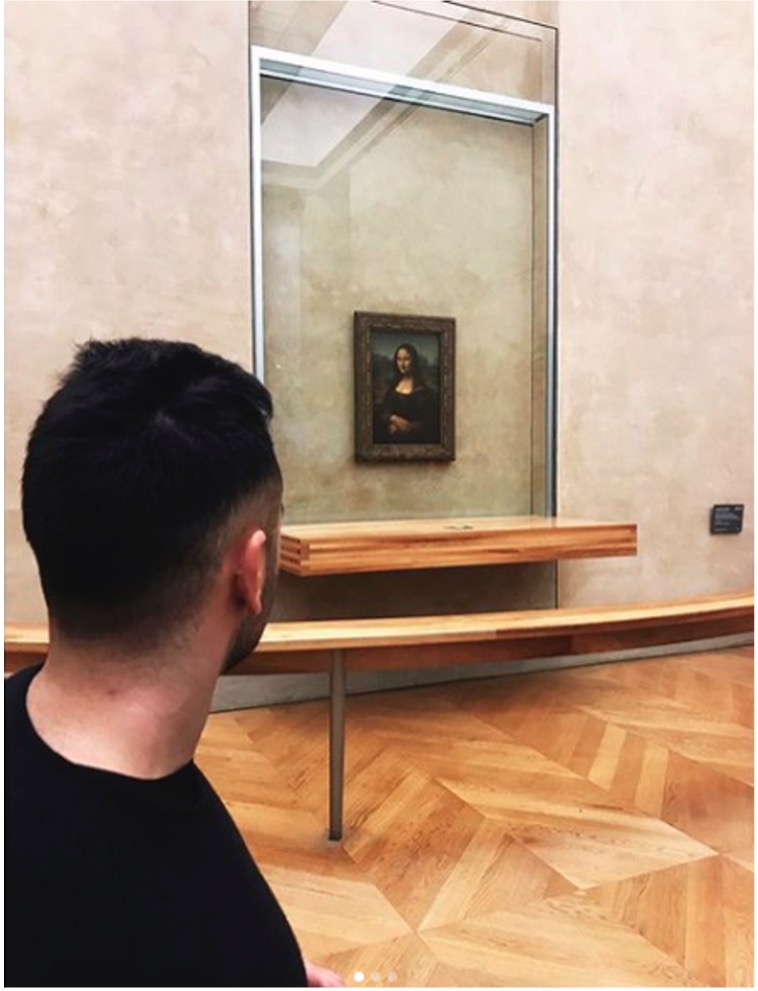
Fig.10
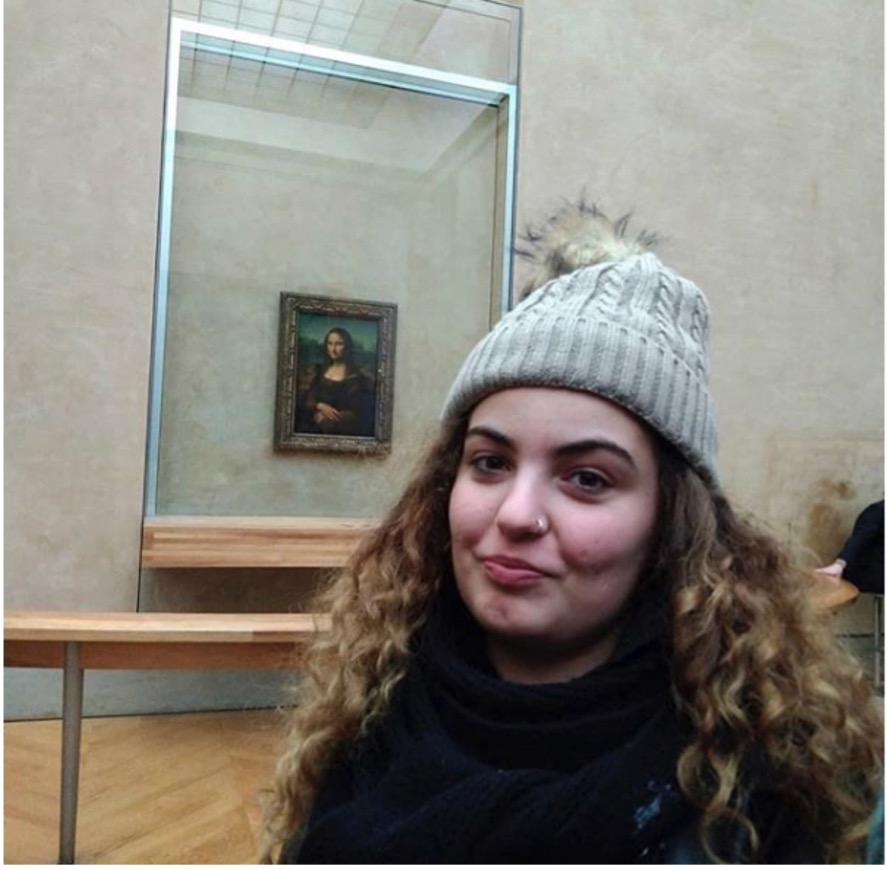
Fig.11
Fig 10,11,12 – found under Instagram #travel
These photographs act as a document to the experience of one of the worlds most famous portraits. Found on the same hashtag, the image below provides a perspective, similar to that of the Lindergards, in which the reality of the experience is captured.
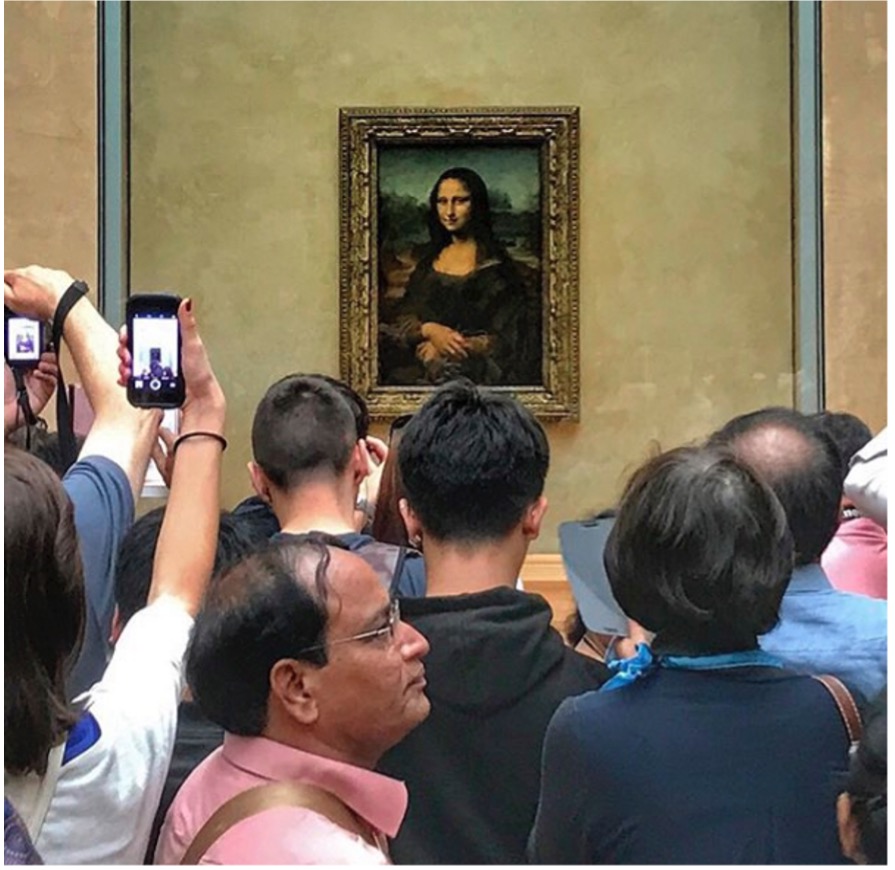
Fig.12
2.2 – Experience
The photographer or painter's variable interpretations of colour, perspective and light, dictate that the experiential divide between the landscape image and the landscape view will always be vast. However, comparing the two experiences it is not immediately obvious which is the stronger or more valid of pursuit. Whilst a common assumption could be made that the authentic experience is the superior, it must first be made clear what authenticity we as a viewer are chasing. Whilst the land's matter itself evidently exists in the landscape, the feeling of unity and cohesion, of fear, contemplation and imagination, exist more reliably within the art of representation. Within a photograph are choices of what to include, what to discard, and a rank ordering of subject matter. Alongside this are aesthetic choices relating to medium, lens and processing. These individual decisions make the photographic image an inevitable projection of the photographer's motive. Be it accuracy, commerce, aesthetic appreciation or memory, photographs exist through intention. Visiting the landscape in person we are often in chase of the emotive experience described by photographs. The photograph however is an idealisation and whilst similar emotional states are achievable, they rely on the alignment of natural elements and a lack of distractions that is far from guaranteed by personal experience.
The transcendental landscape photograph uses the land as a vehicle for purposes beyond aesthetic or geography. As a particular theme or emotion takes priority, geographical location becomes a redundant distraction. Anonymity in the landmarks of in Watching Humans Watching, allows the series to lapse into the fantasy world of Saga, in which a new world is created through images.
2.3 – Saga
Saga, meaning 'fairy tale' or myth in Swedish (2011, p. 47), is a series of mystical landscape images revolving around the adaptation of nature. These images are often taken in the same location as the Watching Humans Watching series but are distinctly human-less. Images in Saga represent a sort of supernatural nature that exists as a result of the artist, remaining unseen by the average tourist.
Watching Humans Watching observes a tourist's appreciation of the physical landscape. Apart from the interruption of people, the Lindergards often follow the composition and form of traditional landscape photographs. Alternatively, Saga sits outside of these traditions unveiling strange, alternative landscapes in which things aren't as they should be.
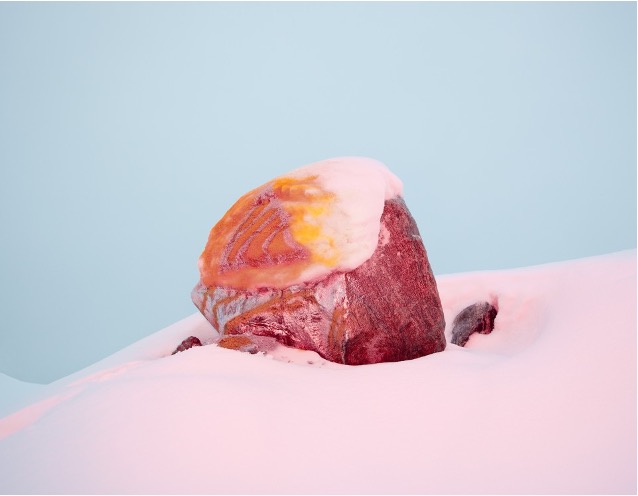
Fig. 13 – Untitled Image from Saga series – Inka & Niclas Lindergard (2011)
In the image Fig. 13, a rock sits in the snow. Whilst the photographer-tourist, or a more traditionally inclined landscape photographer would reveal the entire scene; the image above focuses on a singular rock. Alexxa Gotthardt describes the images in Saga as 'individual impressions – micro views of realities extended and accentuated.' (2011, p. 43). These micro views extend past the picturesque scene (in which we relate to the physical land) and exist as subjective, emotive images. We might consider these different viewpoints in terms Hussey's description of the 'romantic mind' and 'picturesque eye':
The romantic mind, stirred by a view, begins to examine itself, and to analyse the effects of the scenery upon its emotions. The picturesque eye, on the contrary, turns to the scene. (Hussey 1967, P. 84)
In Watching Humans Watching our attention as a viewer is on the scene; we want to be in the position of the person in the image looking across the land in contemplation. In Saga we are this person. Looking upon these images, we contemplate strange photographs as scenes devoid of a connection to the world. The uncanny nature of elements in saga (painted snow, twig sculptures, coloured powder), mystify the landscape and effect our 'romantic mind'; allowing us to interpret the image in emotive, subjective terms.
The Lindergards themselves describe Saga as 'A mood board for anyone creating a fairytale' (Ho, 2011). This definition further shields Saga from a critique of subject matter, claiming that the viewer brings with them their own narrative to coincide with the image.
Prop based performances transform and aestheticize the facts of the physical world. Moments that never existed in reality - a bright pink cloud hovering over a mountain at sunset; exist in the world of imagery as a result of the photographer's action and the ability of the camera to freeze and transform singular moments; in the case of Fig. 14, the throwing of powder.
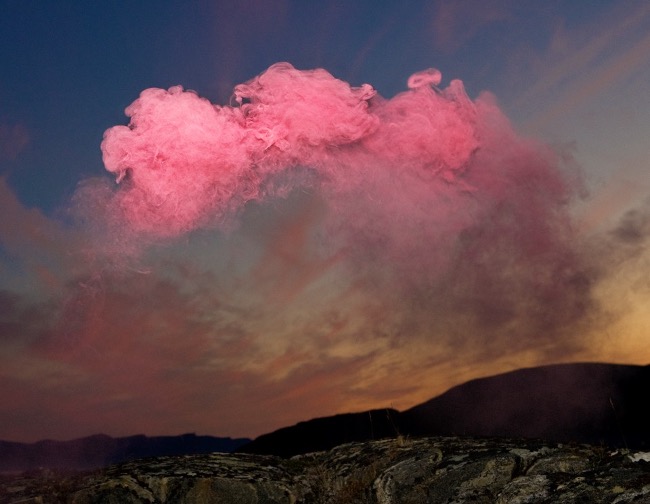
Fig. 14 – Untitled Image from Saga series – Inka & Niclas Lindergard (2011)
The image above (Fig.14) only existed in the physical world as a trivial act; as coloured powder falls to the floor it becomes dust to be washed away by the elements of the world. In Saga however, this powder is an element of the world – a new world of the artist's creation. The Physics of this fantasy world rely on the transforming of landscape through the characteristics of photography, namely the stopping of time, isolation of subject and the control of light. As the picturesque era of landscape paintings revolved around a modified representation of nature for the sake of picturing. The Lindergards modify the landscape itself temporarily, making it suitable for the realm of photographic fantasy.
Chapter 3 – The Man Altered Landscape and the Artist Altered Landscape
3.1 – John Pfhal
The concept of the altered landscape was explored most remarkably by photographer John Pfahl. Pfahl began his series 'Altered Landscapes' in 1974, a time coinciding with the rise of conceptual artists using photography and a revolution in the principles of landscape photography. Until to this point in the 20th century landscape photographers had continued upon the path of romanticism in which nature was represented as pure, natural and a direct manifestation of god. These landscapes presented nature as a spiritual wilderness, a place of solace. This was epitomised in the American landscapes taken by the famous 'F64' group, of which Edward Weston and Ansel Adams were members. Summed up John Szarkowski in his introduction to Ansel Adams's portfolio these landscapes were idealisations:
We are primarily thankful to Ansel Adams because the best of his pictures stir our memory of what it is like to be alone in an untouched world (Szarkowski 1977, p . 6)
Here Szarkowski unwittingly points out an immediate problem with Adams's photography; in the 20th century people weren't, and hadn't ever lived in an "untouched world". Taking issue with the romantic depictions of Yosemite Valley, photographer Robert Adams warns of the segregation and sterilisation this kind of photography can permit, claiming that conservation driven photography has reduced nature to a set of a wild and sublime features.
'The implication has been circulated that what is not wild is not natural' (see Jussim, 1985, p.11). Adams's point enforces that in assigning nature to a specific definition, this type of photography divides man and nature into separate entities, overlooking the truism that humanity in itself is nature and exists in unison with the land and its materials.
In the mid 20th century the art world had began to incorporate various social and political themes. Postmodern art often included text alongside images and judged artwork on terms of content and concept as opposed to aesthetic alone. As a result, the landscapes of Ansel Adams came under scrutiny for romanticising the American landscape at a time when the country was under great strain; suffering in the aftermath of a second world war, and an ongoing anxiety of cold war nuclear destruction. These critiques generated a reactionary wave of man altered landscape photographers embodied by the influential 1975 New York exhibition: New Topographics: Photographs of a Man-Altered Landscape, of which Robert Adams participated.
Devoid of the rich blacks and dazzling contrast of Ansel Adams's landscapes, these photographers opted for a straight, sharp, no thrills type of photography concerned with documenting the man altered landscape without artistic interjection. Featuring only landscapes with an imprint of humankind, this exhibition represented landscape akin to its verbal definition – to landscape, rather than as an idyllic noun of untapped nature. This helped transform the geographic imagination of the American West from a romantic wilderness, to a sight of urban development and economic struggle. As such, this work also marked the beginning of a landscape photography engaged in cultural matters whilst the impact of humanity upon the world raised various environmental and social issues.
As photography is the result of a string of compositional and aesthetic decisions, the idea that these photographers could present images purely topographical in nature and devoid of any personal artistic bias; proved to be somewhat contradictive to the photography's nature. Leo Rubenfien contends that Robert Adams's Denver series:
fails to understand that a picture is responsible for its own meaning with rhetorical devices, and should ultimately be much larger than the flux of detail that the world offers it for material (Jussim 1985, p. 45).
In this quote Rubenfien critiques Robert Adam's lack of artistic interjection. In offering viewers only photographic detail in his landscapes; Adams's work relies on the anchorage of titles and geographical information as opposed to the inbuilt rhetoric that followed in the work of John Pfhal.
John Pfahls Altered Landscapes is a photographic series of American landscape scenes in which the artist strategically places tape, foil, rope and string to toy with the given vantage point and subject matter of the image. Pfahl often throws off the single point perspective of landscapes with the inclusion of vertical lines, seemingly running straight up the image as if in mid air. Presenting the landscape in straight, colour photographs, Pfahl shows the world as it is. Through his alterations however, Pfahl brings to light the photographer's ability to dance between photographic fact and fiction.
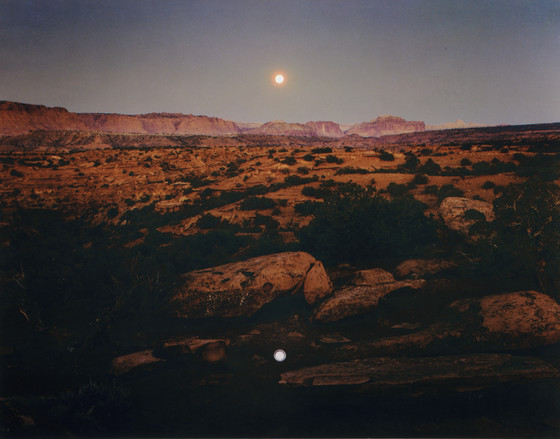
Fig. 15 – Moonrise Over Pie Pan (1977) – John Pfhal
In the above image entitled 'Moonrise Over Pie Pan' Pfahl references Ansel Adam's celebrated landscape photograph 'Moonrise Over Hernandez'. Upon first glance, the perfect placement of a pie pan on the floor transforms the desert into a reflective body of water. This is quickly contradicted by the rest of the dry, desert scenery as the anchorage of the title is understood by the viewer. The ridiculous domesticity of a pie pan in the wilderness asserts a postmodern satire of the impossibility of Adams's image, possibly hinting at the lack of human imprint in Adams's work.
Altered landscapes is an early instance of postmodern self awareness within landscape photography. Referencing celebrated photographs and various photographic clichés, Pfahl incorporates a critique of medium within his landscapes. This was an intrinsic feature of conceptual art at the time, although the photography associated with this period lacked the traditional beauty or technical proficiency of Pfahl, instead opting for deadpan or amateurish aesthetics.
A keen mathematician, Pfahl's Altered Landscapes were the result of meticulous planning and calculation. The results of which are immediately obvious in the final image. As three dimensional landscapes become complex optical illusions Pfhal shows his own involvement in the creation of the image, refuting the romantic notion that nature is a representation of god and presenting himself as god in its place. Brandishing technical accuracy and wit, Pfhal portrays himself as an illusionist, a creator rather than recorder.
Pfhal's transformation of the landscape disrupts what cultural critic Roland Barthes referred to as the photographs invisibility. According to Barthes, upon looking at photographs we disregard the medium and focus directly on the subject matter as If the image was a window into the world (1981, p. 6). Pfhal interrupts this perspective, revealing the differences between how we look at a landscape and how we look at a landscape image.
Introducing a retrospective book of Pfahl's various projects, Estelle Jussim describes Altered Landscapes as 'simultaneously a unique contribution to landscape, to color photography and to idea art.' (See Brutvan 1991, P. 9). These factors seem to describe much of contemporary landscape photography. In the wake of the conceptual art's deadpan aesthetic, photographers have begun to incorporate a strong conceptual theme alongside an aesthetic beauty reminiscent of the romantic era.
3.2 – Andreas Gursky
A natural continuation of the altered landscape can be seen in the practice of German photographer Andreas Gursky. Comparable to Pfhal, Gursky's images rely on an artistic interference with the landscape. As Pfhal acts upon the land and records the process into a photograph, Gursky records the land as it is and acts upon the image of the land in post production. In doing this, the artist disregards the topographical approach to photography, reinstating the artist's vision as more important than the space in front of them.
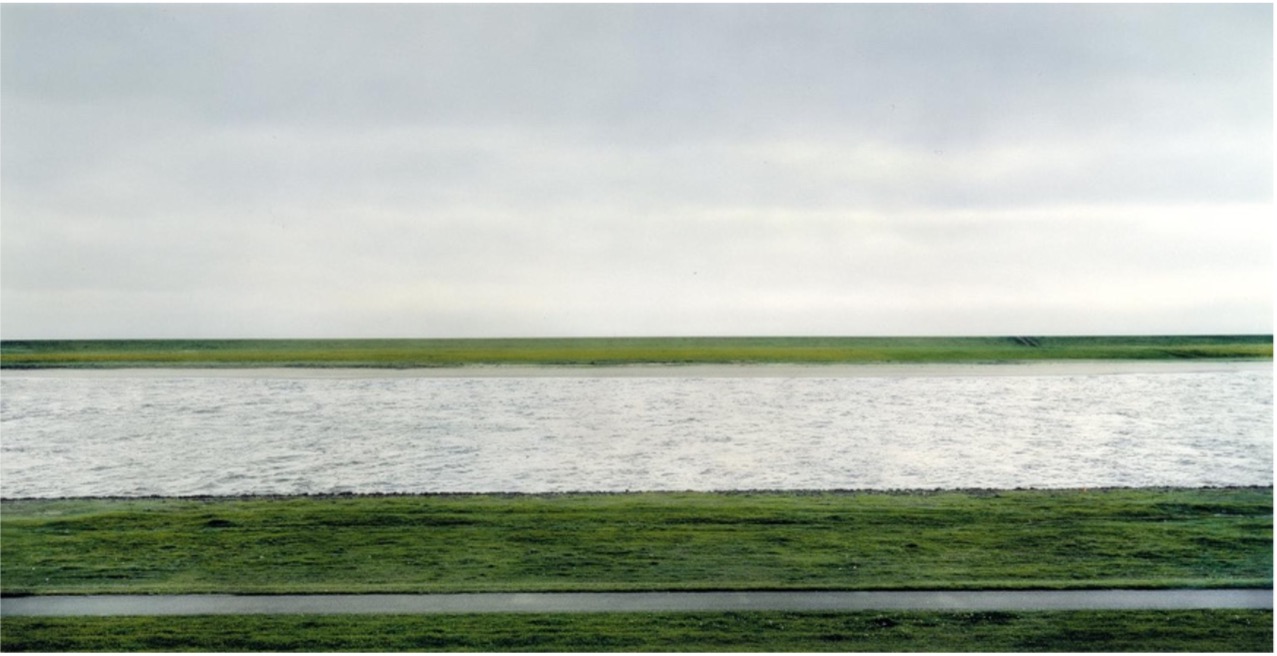
Fig 16 – Rhine II (1999) – Andreas Gursky
Gursky's Rhine II is an image seemingly depicting a section of the river Rhine in Düsseldorf, Germany. Gursky's reincarnation of the land removes the industrial scene behind the river, sacrificing more than half of the original scene. What is left is an abstraction of this view; in which, the green sections of grass and silver river bed are in unity with the grey clouds supplemented by the artist. Speaking upon the creation of The Rhine II Gursky states:
I wasn't interested in an unusual, possibly picturesque view of the Rhine, but in the most contemporary possible view of it. (Taylor 2004)
Whilst Gursky dismisses the Rhine as a picturesque view, the photographs removal of industrial elements places it into the context of romanticism. The somewhat ironic removal of industrial elements using 20th century technology restores a natural view of the Rhine that might have existed before the land was built upon. Here, Gursky transforms place back to space in rebellion of Well's definition of landscape. However; contrary to a romantic glorification of unspoilt nature, Rhine II is bleak and empty of sentiment. As such, Gursky reveals the impossibility of recovering our romantic, mystical view of the landscape.
The beauty of the Rhine II is a result of the photographs formal construction. Replacing the beauty of land with the beauty of form, Gursky is recreating and simultaneously dismissing the myth of the mystical landscape that was glorified by modernist photographers during the 20th century.
Whilst the digital manipulation within Gursky's images taints its indexicality with the land; the scale of the artist's prints and an atmospheric colour palette simulate a physical experience.
Standing upon the Rhine II, at 190 cm × 360 cm, one cannot help being put in an experiential position physically as well as mentally. Rhine II crosses the experiential border between physical landscape and landscape image. In both a physical and psychological sense, the Rhine II is more real in Gursky's Print, as paper and ink, than in it is in the 'natural' world as land and sky.
Chapter 4 – Landscape as Political Statement: Influencing Geographical Imagination
With an overwhelming media focus upon global warming in the last 50 years, the representation of landscape as a sacred place of contemplation has become out of sync with its actuality. This kind of image now contradicts what we know about the landscape – that it is suffering physically as a result of our technological advancements. This realisation has led many contemporary photographers to abandon this fabricated spirituality, in favour of a politically based environmental agenda.
4.1 – Edward Burtynsky
Edward Burtynsky is a contemporary landscape photographer renowned for his large format photographs of industrial landscapes; in which the effects of our environmental footprint are prominently displayed.
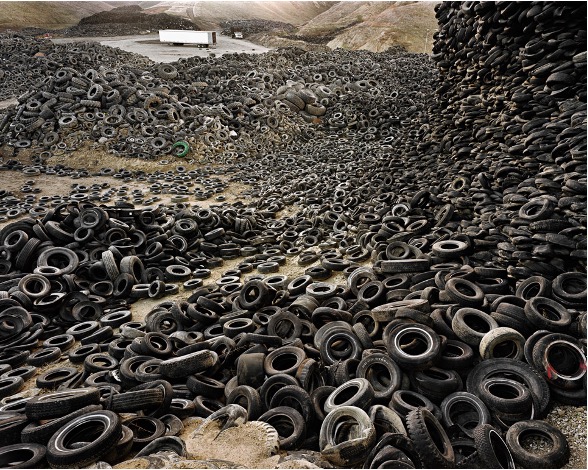
Fig. 17 – Oxford Tyre Pile #1 (1999) – Edward Burtynsky
From Burtynsky's 2010 photo series 'Oil'; Oxford Tyre Pile #1 is a part of the photographer's visual investigation into the environmental impact of the automobile. Here Burtynsky presents a scene that is the polar opposite of the untouched natural landscape. By abstracting this site from the rest of its environment and framing it perfectly full within the confines of an image, this scene still exists as a fiction. In this scene the artist renders the world as a dystopian future consisting of only industrial litter. Burtynsky is cautioning the viewer of the danger of our expendable, industrial culture by showing where we may be headed. Photographing this tyre yard Burtynsky adopts the same picturesque form and composition as in traditional, none urban landscapes. As such, the photograph remains a picturesque landscape, possessing the same coherence of form that can be found only in images. Here is where this kind of environmental led photography can become problematic. Burtynsky adopts picturesque composition when photographing this waste site; offering the viewer a feeling of beauty in the form of harmony and balance. There exists a juxtaposition in this image between the works conceptual and visual message. In a strictly visual sense Burtynsky is pardoning the very thing he aims to condemn.
4.2 – Magda Biernatt
Similar to Burtynsky, Magda Beirnat photographs the direct effects of global warming in her 2015 series 'Adrift'. Consisting of only isolated, sky blue icebergs and abandoned Iñupiat hunting cabins; the two subject matter run parallel in the form of a photobook. This diptych arrangement generates immediate relationships in form. As each set shares the same straight on, minimal aesthetics, the differences between the two slowly become apparent throughout.
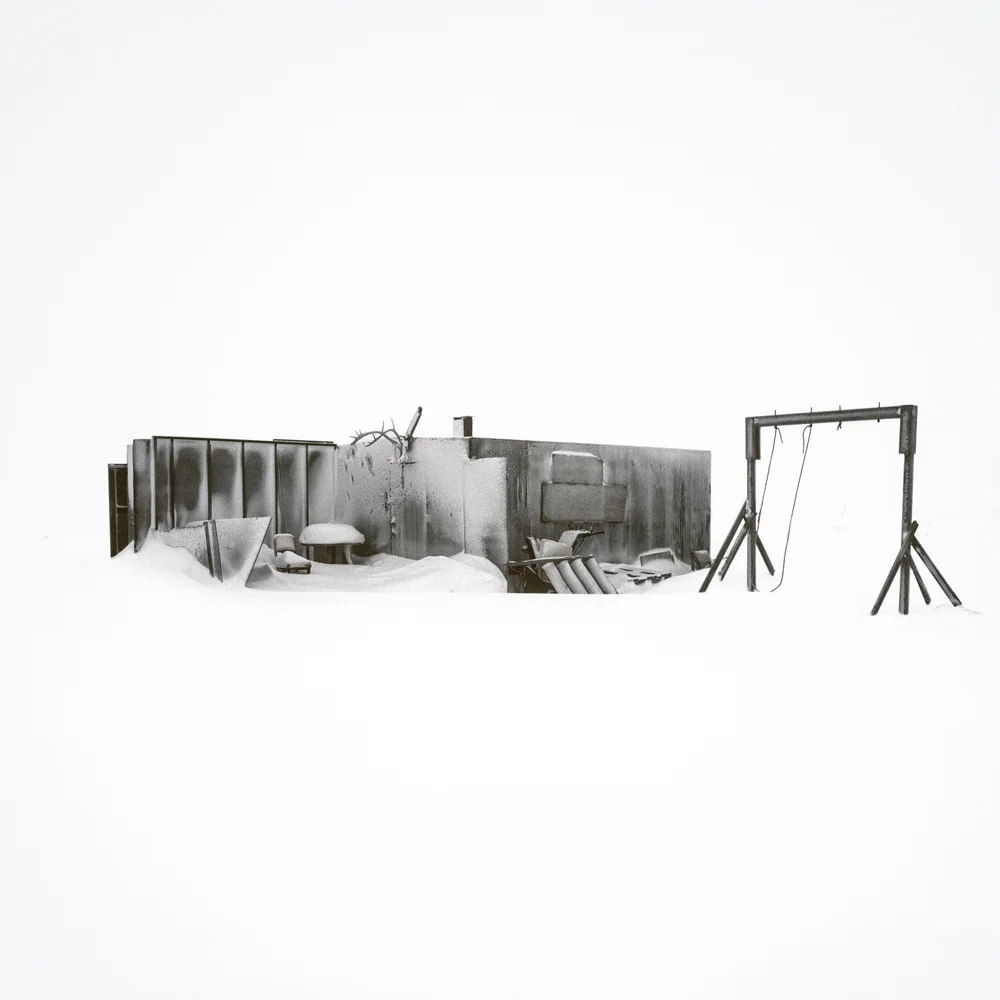
Fig. 18 – Untitled, From Adrift (2015) - Magda Biernatt
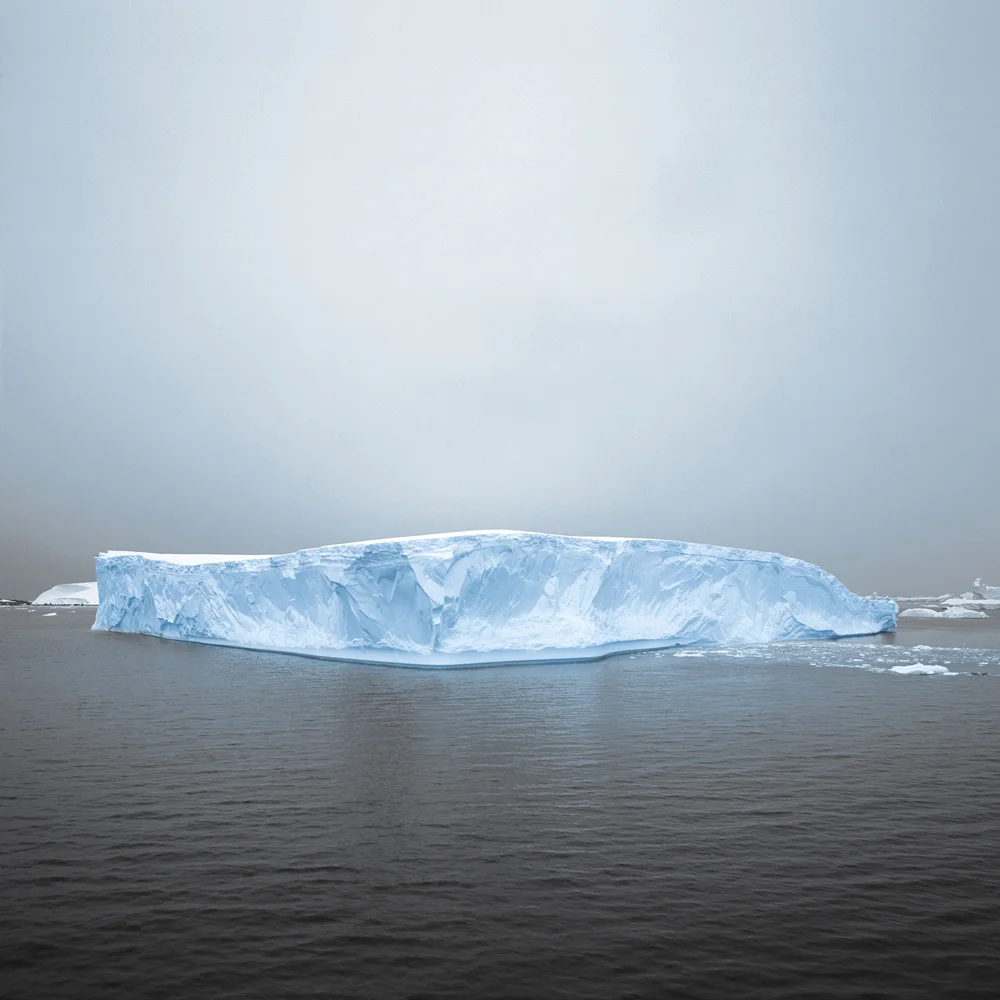
Fig. 19 – Untitled, From Adrift (2015) - Magda Biernatt
Although Biernatt's series is highly aestheticized, the ecological message of the work lies within the form of the images. The simple, continuous arrangement of a similar scene reinforces the size and frequency of stray glacial floats; whilst the repetition of basket ball hoops and swing sets against mounds of submerging snow, illustrate how the elements have rendered a former home completely uninhabitable. As these two images run side by side, one compares the man made huts to the man-consequent icebergs. As these forms mimic each other it is as if Biernatt is saying to us that we are shaping our man made world, we are miss-shaping the natural world. Although there is still an inherent bias to these images; Beirnatt's adoption of a straight on, minimal aesthetic removes it from the holds of the picturesque that bind Burtynsky's work. Adrift however, is not devoid of romanticism. As extreme weather takes over abandoned Iñupiat huts, we are reminded not just of the western worlds damage upon the world, but also of humanity's inferiority at the feet of the natural elements. The former occupants of these huts are as helpless against the extreme weather of global warming as Turner's Steam-Boat was at the wrath of nature in the chaos of a snowstorm. Referencing philosopher Edmund Burke's terminology, David Bate titles this new type of landscape the tragic sublime. In which humans are seen as "a blight on an otherwise picturesque nature" (2009, p. 106).
Chapter 5 – Re-emergence of the Romantic Myth in Contemporary Photography – Awoiska Van Der Molan
Differing from this environmentally aware photography; some contemporary art photographers continue to perpetuate idea of the romantic landscape without post-modern irony.
Awoiska Van Der Molan is a celebrated contemporary photographer known for making black and white, abstracted images of nature. Molan's photographs are the result of her long periods alone in the wilderness, although rather than her images being a visual representation of her surroundings, Molan's photographs act as a metaphor for the mystery and solidarity of her experience. In this sense Molan's practice adheres to the theory of photographic equivalence. Coined by iconic photographer Alfred Steiglitz, this term was used to describe photographs that transcend the representation of subject matter; instead existing as an equivalent metaphor for a feeling or emotion.
Expanding on the principles of equivalence, photographer Minor White talks of the ability within photographs to convey a sense of feeling:
When a photograph functions as an Equivalent, the photograph is at once a record of something in front of the camera and simultaneously a spontaneous symbol. (A "spontaneous symbol" is one which develops automatically to fill the need of the moment. A photograph of the bark of a tree, for example, may suddenly touch off a corresponding feeling of roughness of character within an individual.) (White 1963).
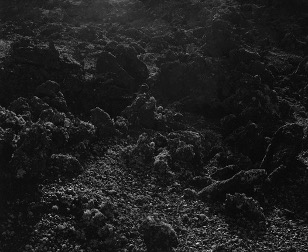
Fig. 20 – #326-5 (Date Unknown) – Awoiska Van Der Molan
Molan's images use shadows in the same sense as White's example uses tree bark. By accentuating the darkness of shadows in her prints, Molan emphasises a feeling of ambiguity that corresponds with Burke's definitions of the sublime.
"But let it be considered that hardly any thing can strike the mind with its greatness, which does not make some sort of approach towards infinity; which nothing can do whilst we are able to perceive its bounds; but to see an object distinctly, and to perceive its bounds, is one and the same thing." (Burke 1757, P.108)
As Molan projects her inner emotions onto the landscape, the resulting aesthetics are akin to John Ruskin's original definitions of pathetic fallacy. This term was coined by Ruskin to define the way that natural elements personify as we project upon them certain emotions, resulting in 'a falseness in all our impressions of external things' (Ruskin 1856). Relating to romantic poets and painters, Ruskin pardons the inaccuracy of such descriptions claiming that pleasure is found in this fallacy through the accurate portrayal of emotion rather than scenery.
Looking upon the darkness within Molan's images we feel the equivalent emotions of isolation and melancholy that are associated with the dark and unknown. In this sense Molan's work is similar to the Lindergard's Saga series; they act as a foundation for the viewer to project a personal story upon. The ambiguity of Molan's images is further justified in her supporting artistic statements. Here there is also tremendous focus upon the photographic process in Molan's work. Using a large format film camera and exclusively using traditional printing processes; Molan exhibits fine art prints that demand a contemplation independent of a pure and divine wilderness. Speaking on Molan's work in the catalogue of 2017's Deutsche Börse photography award, Yve Lomax distinctly states that Molan's images provide a contemplation of their own:
The more I look and stay looking, the more I'm drawn into a process of contemplation. In fact, I'll go as far to say that these monochromatic images bring contemplation, a living contemplation. (2017, P.67)
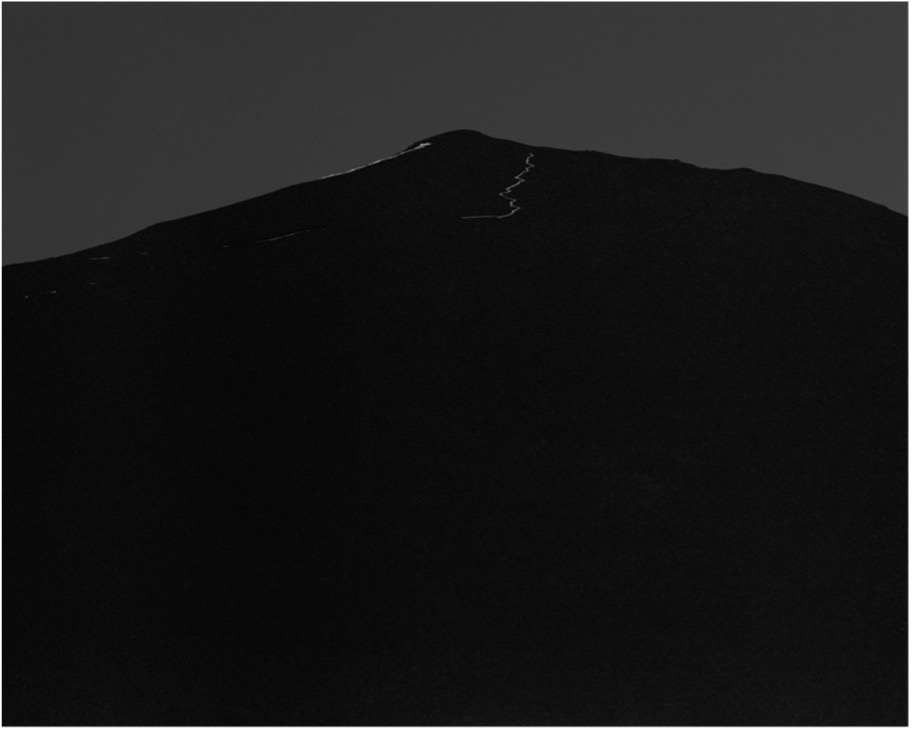
Fig. 21 – #212-7 (2011) – Awoiska Van Der Molan
Lomax here refers to a separation from subject matter in Molan's work. Without any visual or written clues regarding where the photographs were made, we as a viewer are knowingly confronting a fiction. Here we are free to depart from the guilt of Bate's 'Tragic Sublime', allowing us to revel in the black and white story of a mysterious and untouched land. This fantasy allows us an escape from the stress and responsibility of modern life. To quote Clive Bell in his definition of aesthetic formalism 'we are lifted above the stream of life' (Crowther 1996, p. 28), away from the political separation of the physical land and into the freedom of an infinite, impossible nature.
This is a life not beset with separations (divisions cut, walls erected, borders controlled). It is to be experienced – and loved – with the photographic images of Awoiska Van Der Molen that will wait and wait for you to look (Lomax 2017, P. 68).
Similar to the work of Ansel Adams; the success of Molan's fictional world relies on presenting the land in abstracted terms and excluding any elements of human interaction. Additionally, both artists emphasise the importance of the dark room print and use similar materials and subject matter. Where the works differ however is in form. Adams's photographs are conventionally composed and reveal the grandeur of a landscape in relation to the scale of elements in the physical world, in turn, inducing in the viewer feelings of the sublime.
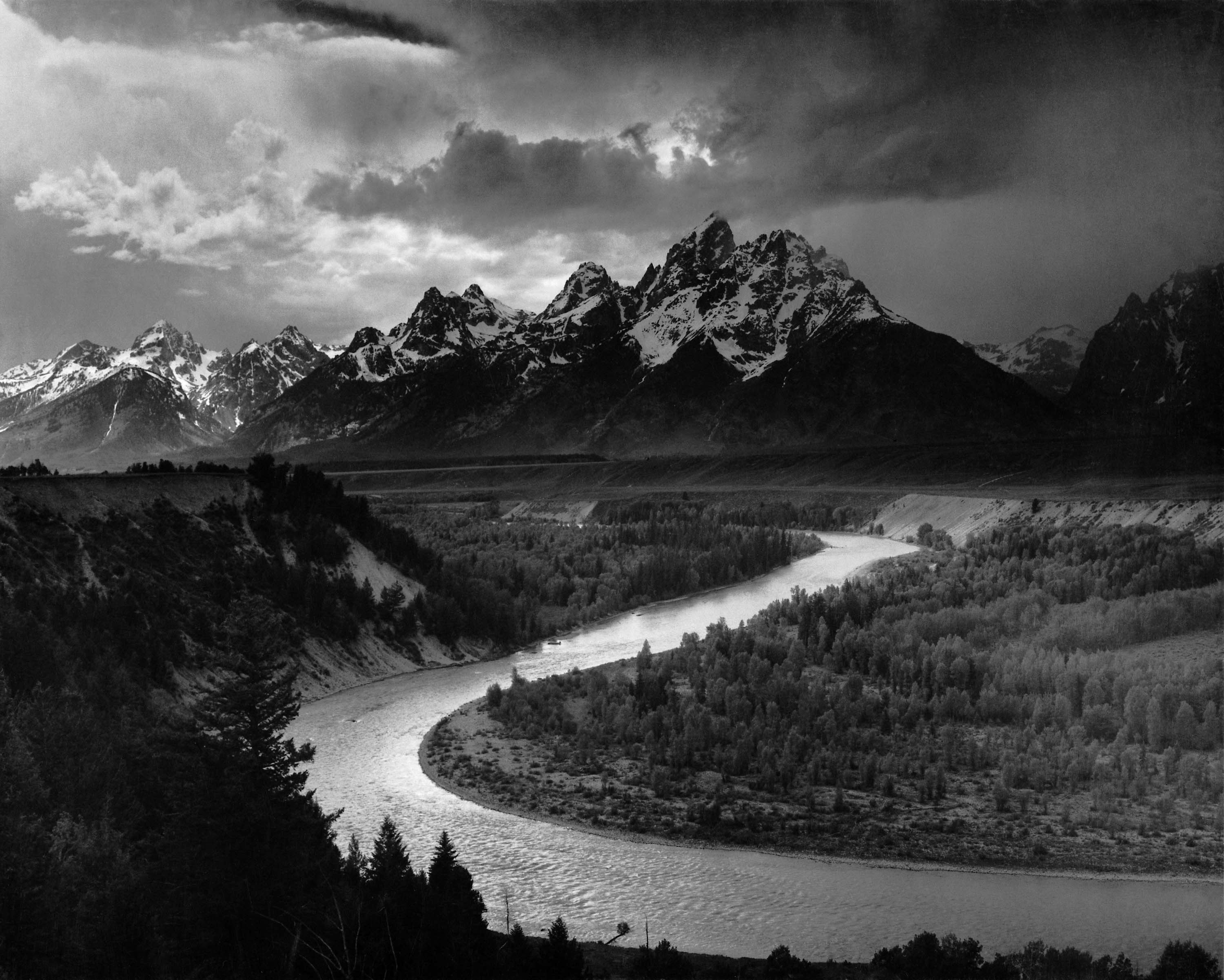
Fig. 22 – The Tetons and the Snake River (1942)- Ansel Adams
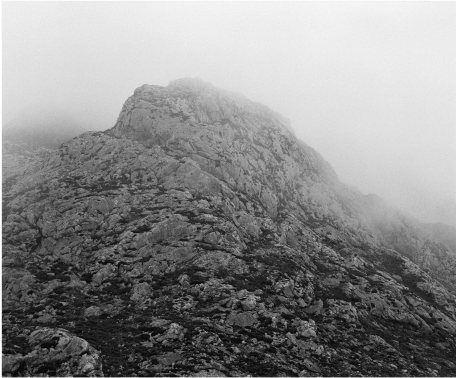
Fig. 23 - #204-4 (2009) – Awoiska Van Der Molan
Comparatively, Molan's images present singular, abstracted elements. The difference in viewpoint here is similar to that in Watching Humans Watching/Saga. Molan's photographs embody the 'micro views' (Gothardt 2011, p. 43) of Saga, whilst Adams's images are a broad glorification of place. Adams's work was also permanently associated with the photographer's environment. Often titling his photographs geographically, the fame of Adams's images often led towards environmental intervention most notably seen in the expansion of national parks as a result of his involvement in the Sierra club. Molan's images are named numerically, without such context; this allows them a contemplation not reliant on place. Consequently, in Molan's images we avoid the environmental guilt that comes with enjoying a photograph of a world that we are destroying. This aligns with David Bate's comment on the inherent visual command of picturesque images, even in the face of the 'Tragic sublime':
Even if the critique is about a photograph serving up 'rural myths', romanticised views that negate the pollution or human destruction of natural land, a spectator can appear as in the grip of some emotional effect of pleasure which no amount of deconstruction can touch or stop. (2009, P. 102)
Here, Bate sums up the appeal of Molan's work; in the aesthetic pleasure these images provide.
Atmospheric, mood based landscape images acted as equivalents as early as the work of Minor White in the 1950's. Additionally, Molan's aesthetic and subject matter is extremely traditional, particularly reminiscent of the work of 20th century black and white landscape photographers such as Thomas Joshua Cooper's 'Between Dark and Dark' (1985). This work however was still often referential to various locations and dates. Molan's work is hardly a radical contemporary idea nonetheless; although, I suggest that from the original dismissal of the idea of a romantic landscape, we have learned to identify photography's faithfully described emotions separate to a faithfully described representation of site; we have become tired of looking at these emotions through the satirical postmodern lens. In Molan's work, we ignite a desire to live in a visual poem; exist in a world that never was.
Conclusion
By looking at the variation of landscape fictions projected throughout artistic periods, it becomes clear there is a constant to and fro of the landscapes relation to truthful representation. Throughout history there is the dilemma of whether to accept photography's representational limitations, separating the image as far from the physical world as possible; or to ignore these limitations and attempt to provide the most topographical description. In contemporary photography these representations coexist, often they blend together in the form of art documentary photography. This type of project provides the viewer with an artistic representation of a real world event, for example in Jack Latham's 'Sugar Paper Theories' (2016).
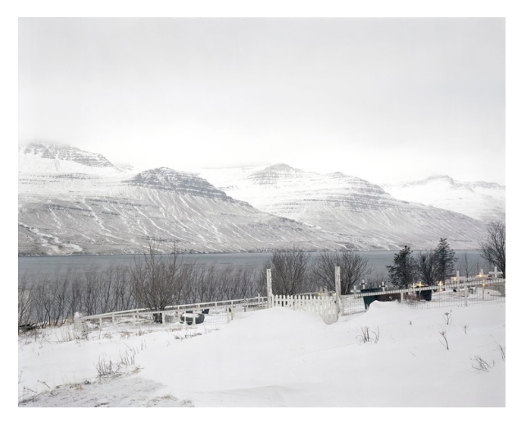
Fig. 24 - Cemetery, Stöðvarfjörður, Eastern Iceland – Jack Latham
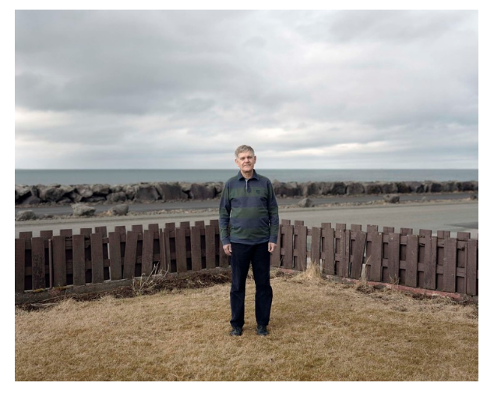
Fig. 25 - Gísli Guðjónsson – Jack Latham
Based upon the infamous "Gudmundor and Geirfinnur" investigation, this project relates to the story of two Icelandic men disappearing under mysterious circumstances. Sugar Paper Theories romanticises this story through a mixture of landscapes, still lives, portraits and drawings, in a sense becoming a narrative 'based on a true story'.
The increasing frequency of artist's making photobooks hints at the importance of narrative within contemporary photography. As hoards of tourists capture and share technically impressive landscape images with their DSLR's, we have become jaded by the singular landscape image. From here artists like Molan, Latham and Inka and Niclas Lindergard, make use of the landscape as a means to tell a story. The degree of which this story relies on the physical world varies, although in each case it is understood that these images are subjective and experiential. Throughout years of landscape representation, artists have adopted, challenged and succumb to photography's inherent contradiction; that contained in a photograph there is both the truth of what is in front of the lens, and a transformative truth that lies within the camera and within the photographer.
Bibliography
Adams, A., and Szarkowski, J., 1977. The Portfolios of Ansel Adams. Thames and Hudson. LondonBarthes, R., 1981. Camera lucida: Reflections on photography. Macmillan.
Bate, D., 2009. Photography: the Key Concepts. Berg. Oxford.
Brutvan, C., 1991. A Distanced Land; The Photographs Of John Pfahl. University of New Mexico Press. Buffalo.
Bryson, N., 1984. Vision and painting: The logic of the gaze. Yale University Press. Yale.
Burke, E., 1757. A Philosophical Enquiry into the Origin of Our Ideas of the Sublime and Beautiful. Oxford’s World’s Classics. Oxford
C Print, 2016. The Belt of Venus and the Shadow of the Earth [online]. C Print: C-Print. Available at: https://www.c-print.se/single-post/2016/11/01/The-Belt-of-Venus-and-the-Shadow-of-the-Earth [Accessed 10 December 2018].
Crowther, P. 1996. Beyond Formalism [online]. Oxford Scholarship Online: Oxford. Available at https://ojs.zrc-sazu.si/filozofski-vestnik/article/download/3768/3470 [Accessed 20 February 2019]
Gilpin. W., 1791. An Essay On Prints. BiblioLife. Charleston.
Ho, A. 2011. Human Behavior: An Exploration of People Watching [online]. Time: Time. Available at: http://time.com/16174/watching-humans-watching-inka-lindergard-and-niclas-holmstrom-3/ [Accessed 20 December 2018]
Hussey, C., 1967. The picturesque : studies in a point of view. Frank Cass. London
Jussim, E., and Lindquist-Cock, E., 1985. Landscape as photograph. Yale University Press. Yale.
Lindergard, I., and Lindergard, N., 2011. Watching Humans Watching. Heidelberg. Stockholme
Mitchell. WJ., and Mitchell. JT., 2002. Landscape and power. University of Chicago Press. Chicago
Molan. A., and Calle. S., and Lixenberg. D., 2017. Deutsche Borse Photography Foundation Prize 2017. Photographers Gallery. London
Ruskin. J., 1856. Of The Pathetic Fallacy [online]. Ourcivilisation. Available at:
http://www.ourcivilisation.com/smartboard/shop/ruskinj/ [Accessed 30 January 2019]
Taylor, J., 1994. A dream of England. Manchester University Press. Manchester
Taylor, R. 2004. The Rhine II [online]. Tate: Tate. Available at https://www.tate.org.uk/art/artworks/gursky-the-rhine-ii-p78372 [Accessed 12 January 2019]
Wells, L., 2011. Land matters. Landscape Photography, Culture and Identity. I.B.Tauris & Co Ltd. London
White, M. 1963. Equivalence: The Perennial Trend [online]. PSA Journal. jnevins. Available at http://www.jnevins.com/whitereading.htm [Accessed 14 November 2018]
Illustration List
Figure. 1 Digital Camera., 2018. Digital Camera November 2018 Issue 209. [Digital Image]. Myfavouritemagazines. Available at:
https://www.myfavouritemagazines.co.uk/photography/digital-camera-magazine-back-issues/digital-camera-november-2018-issue-209/
Figure. 2 Digital Camera., 2018. Digital Camera Issue Spring 2018. [Digital Image]. Pocketmags. Available at:
https://covers.magazinecloner.com/covers/164528.jpg
Figure. 3 Digital Camera., 2018. Digital Camera Issue September 2018. [Digital Image]. Pocketmags. Available at:
https://covers.magazinecloner.com/covers/171562/thumb/0000.jpg
Figure. 4 Turner. J., 1842. Snow Storm - Steam-Boat off a Harbour's Mouth. [Painting]. Tate. Available at:
https://www.tate.org.uk/art/artworks/turner-snow-storm-steam-boat-off-a-harbours-mouth-n00530
Figure. 5 Friedrich. C., 1809. Monk By The Sea. [Painting]. Tate. Available at:
https://www.tate.org.uk/context-comment/articles/whispering-zeitgeist
Figure. 6 Lindergard. I. and Lindergard. N., 2011. Untitled. [Photograph]. Inkaandniclas. Available at:
http://inkaandniclas.com/project/watching-humans-watching/
Figure. 7 itx_babar_yousafxai., 2018. Untitled. [Photograph]. Instagram. Available at:
https://www.instagram.com/p/BtGYVDGgCFK/
Figure. 8 ryzhevolosik., 2018. Untitled. [Photograph]. Instagram. Available at:
https://www.instagram.com/p/BtGYVxXBRmc/
Figure. 9 Cap_vert_en_images., 2018. Untitled. [Photograph]. Instagram. Available at:
https://www.instagram.com/p/BtGYSQ0gVEz/
Figure. 10 csontosadi., 2018. Untitled. [Photograph]. Instagram. Available at:
https://www.instagram.com/p/BtGM2W3jRa-/
Figure. 11 reh_renata98., 2018. Untitled. [Photograph]. Instagram. Available at:
https://www.instagram.com/p/Bs50O_-HhHP/
Figure. 12 Tarno. M., 2018. The Mona Lisa Crowd 2/3. [Photograph]. Instagram. Available at:
https://www.instagram.com/p/BtGXRbLlOYT/
Figure. 13 Lindergard. I. and Lindergard. N., 2011. Untitled. [Photograph]. Phaidon. Available at:
https://uk.phaidon.com/agenda/photography/picture-galleries/2011/december/13/inka-and-niclas-change-the-landscape/
Figure. 14 Lindergard. I. and Lindergard. N., 2011. Untitled. [Photograph]. Inkaandniclas. Available at:
http://inkaandniclas.com/project/watching-humans-watching/
Figure. 15 Pfhal. J., 1977. Moonrise Over Pie Pan, Capitol Reef National Park, Utah. [Photograph]. Lacma. Available at:
https://collections.lacma.org/node/243412
Figure. 16 Gursky. A., 1999. The Rhine II. [Photograph]. Tate. Available at:
https://www.tate.org.uk/art/artworks/gursky-the-rhine-ii-p78372
Figure. 17 Burtynsky. E., 1999. Oxford Tire Pile #1. [Photograph]. Edwardburtynsky. Available at:
https://www.edwardburtynsky.com/projects/photographs/oil/
Figure. 18 Biernat. M., 2015. Untitled. [Photograph]. Magdabiernat. Available at:
https://www.magdabiernat.com/adrift/
Figure. 19 Biernat. M., 2015. Untitled. [Photograph]. Magdabiernat. Available at:
https://www.magdabiernat.com/adrift/
Figure. 20 Molan. A., (N.D). #326-5, [Photograph]. Pismowidok. Available at:
http://pismowidok.org/index.php/one/article/view/245/435
Figure. 21 Molan. A., 2011. #212-7, [photograph]. Lensculture. Available at:
https://www.lensculture.com/articles/awoiska-van-der-molen-blanco-silent-landscapes#slideshow
Figure. 22 Adams. A., 1942. The Tetons and the Snake River. Lomography. Available at:
https://www.lomography.com/magazine/246151-influential-photographs-the-tetons-and-the-snake-river-1942-by-ansel-adams
Figure. 23 Molan. A., 2009. #204-4. [photograph]. Loeildelaphotographie. Available at:
https://loeildelaphotographie.com/en/event/lecture-with-awoiska-van-der-molen/
Figure. 24 Latham. J., 2016. Cemetery, Stöðvarfjörður, Eastern Iceland. [photograph]. Jacklatham. Available at:
https://www.jacklatham.com/project/sugar-paper-theories/8p2bhehq4x9hcin8qh8o0l3v4dvrkl
Figure. 25 Latham. J., 2016. Gísli Guðjónsson [photograph]. Jacklatham. Available at:
https://www.jacklatham.com/project/sugar-paper-theories/mlrl1mkmtgs4ayn0z5ix9kfpsk8eth