'Indeed the rise of the term “the photographic” corresponds with the widespread assumption that photography is now distributed, if not dissolved, across an “expanded field” of artistic production.'
Campany, 2014
The examples I have chosen for this essay represent a reaction in contemporary photography to the emphasis of conceptualism within art. This reaction is in part due to a change in the education of the arts in which a clear conceptual message is emphasised.
'Contemporary photographers operate in an environment that is simultaneously rigid and permissive. On the one hand, the majority are trained at art school where they are requited to provide a clear conceptual rationale for their work, especially at BA level. On the other hand, their work becomes increasingly eclectic, ambiguous and resistant to interpretation at MA level and after graduation.'
Soutter 2012. P.23
This has led to many contemporary photographers embracing a different set of characteristics in their work, namely ambiguity, physicality, process and aesthetics. Lucus Blalock is a contemporary photographer whose trademark seems to be the altered image. Blalock’s process involves shooting with a large format film camera, scanning the negative and then using Photoshop to create the final picture. Conceptually Blalock’s work deals a lot with questions of process. By making his digital manipulation apparent at first glance Blalock is challenging the pursuit of perfection that currently underlines commercial photography. Speaking on the concepts behind his work in a video named “Lucus Blalocks tool kit” Blalock credits this idea to Bertolt Brecht’s critical book on theatre.
'In Brecht on theatre he was talking about bringing the labour that happened off stage in a theatre production on to the stage, I started to think about the kind of labour I was hiding. There are all these ways you can hide your labour in Photoshop and I’ve been really interested in sort of, undermining these things. '
(Ravich, 2015)
In the same video the artist shows the start to finish process of his self portrait “The Smoker”. Blalock states his inspiration for this image to be René Magritte’s Le Stropiat.
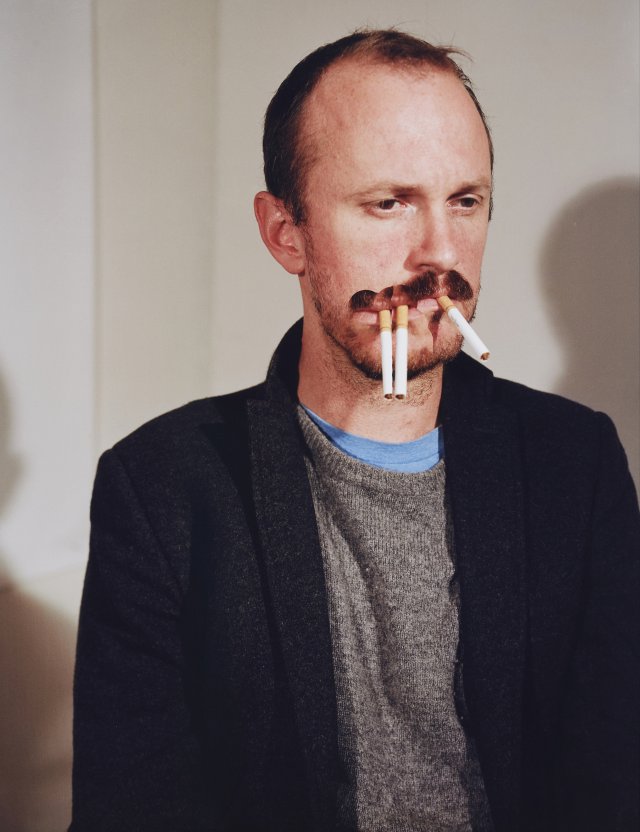
Fig.1
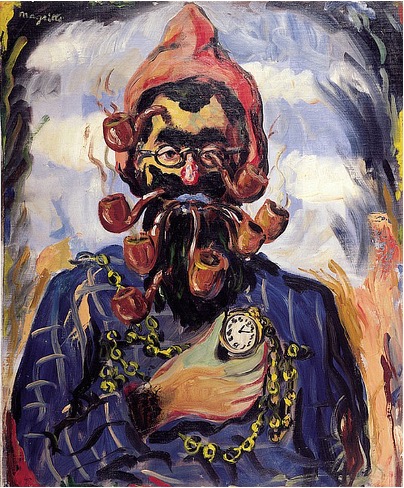
Fig.2
By manipulating the mouth in an obvious and jarring way, Blalock throws off the perspective of the subject’s head, making the image uncomfortable to look at. The eye is drawn to the cigarettes, suggesting a straight on view of the face, immediately this idea is contradicted by the subject’s eyes, making the overall image deeply strange. The end result is reminiscent of the early photo montages made during the surrealist movement, in that the process is visible, yet aesthetically coherent.
The laborious and technical process Blalock undergoes whilst shooting with a large format camera, is in a way undermined by a visible lack of care or attention in the images final digital manipulation. The tension between processes in Blalocks practice creates a sense of self awareness and irony not uncommon to the practice of conceptual artists. Here Blalock in a way confronts a common criticism of both conceptual art and photography, the apparent lack of a developed technique or artistic talent. For photography this critique has been around since its invention and continues to crop up in comparisons between the amateur and the art photographer. In 2014 an article published by The Guardian entitled “Flat, soulless and stupid: why photographs don’t work in art galleries” writes of the impossibility of the photograph ever reaching the aesthetic heights of painting.
'Paintings are made with time and difficulty, material complexity, textural depth, talent and craft, imagination and “mindfulness”. A good painting is a rich and vigorous thing. A photograph, however well lit, however cleverly set it up, only has one layer of content. It is all there on the surface. You see it, you’ve got it. It is absurd to claim this quick fix of light has the same depth, soul, or repays as much looking as a painting by Caravaggio – to take a painter so many photographers emulate.'
(Jones, 2014)
Conceptual discourse seems to have taken somewhat of a backseat in the work of some contemporary photography, in favour of a more ambiguous, open ended message. Lucus Blalock’s book “I Believe You Liar” is a project inspired by film director Jean-Luc Goddard, specifically his use of the cinematic jump cut. Throughout the book images are incoherent, there seems no linear theme connecting the photographs.
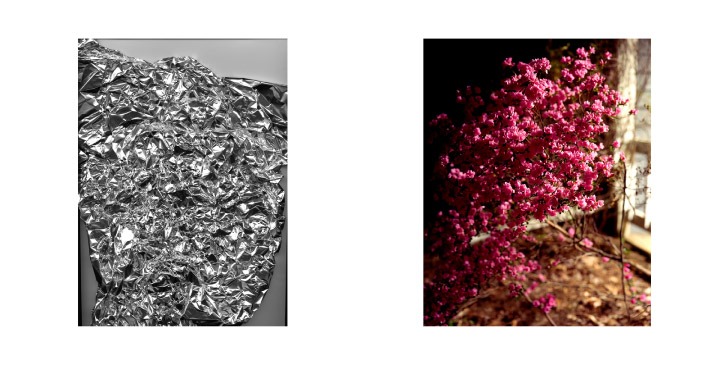
Fig.3

Fig.4
Subject matter is eclectic and random, portraits are shown next to abstract images of interiors and landscapes as if to suggest some sort of scene, although no plot or explanation is to be found. The images themselves are aesthetically pleasant and photographic in style, if at times quite bleak and strange. The overall ambiguity of the book along with the visual pleasure of the images allows the reader to project a personal narrative onto the books meaning. This project fits perfectly into Lucy Soutter’s description of photography’s current conceptual and aesthetic freedom.
'However much artists may load them up – with content, with intent, with concepts – they will remain on some level resolutely, perversely visual. Contemporary art photography is currently embracing this notion. Photographers are at liberty to draw on the precedents of earlier conceptual and postmodern practices, as well as the theories that framed them, but they also have the freedom to wear their conceptual influences lightly, to produce works that cannot be pinned down fully in words.'' (Soutter, 2012)
This notion of photographers being free to explore concepts and aesthetics in the pursuit of something “that cannot be pinned down fully in words” however is rarely successful without the inclusion of some sort of loose conceptual goal. In the case of “I Believe you liar” it would be the books relation to the cinematic jump cut that stops it from being a random selection of images and allows it to be seen as a photobook.
‘The Belt of Venus and the Shadow of the Earth’ is a photobook made by Photographers Inca & Niclas Lindergard. The project engages in a self aware conceptuality that critiques the medium of photography, whilst maintaining a distinct focus on process, technique and aesthetics. The title relates to the pink glow that appears during sun rise or sets, in which the earths shadow can be seen as a blue colour above the horizon. The title of the project is a fitting representation of the overall artistic decisions in the book. The title anchors the book to a conceptual framework, referring to a subject matter that is used throughout, however the title is also ambiguous and epic, delivering no particular clear message as to the books intentions. Inside, the subject matter is a host of the most common photographic clichés; sunsets, wildlife, lightning, but taken in a way as to subvert the tropes of the picturesque. The couple use coloured flash throughout, penguins appear bright red, caves and rocks are illuminated in red yellow and purples and sunsets are recreated with a glowing red foil ball replacing the sun as it rides on the waves of the ocean. Beautiful landscapes and sublime lightning storms are sucked into a black void from the centre of the image outwards, a product of the photographers using a coin to cover the middle of the lens.
'Just do an image search on “beach” or “sunset” or “grand canyon” and the first 100 hits or so will be very similar to each other and share very specific aesthetic attributes. When looking at the results from the “sunset” search for example, many of the photographs either contain a palm tree or a dolphin, hence the perfect sunset photograph must be one that has both. That is interesting and would be something for us to have as a loose base for further inquiries when working. We make a distinction between the photographic reality and our physical reality and we see the camera as a transitional device between the two. We are interested in the act of taking a photograph, the moment of exposure and the transition into the photographic reality.' (SIMCHAK, 2015)
Images are strangely captivating; the seamless redesigning of physical elements brings upon the viewer a feeling of otherworldliness that acts independently of the works critiques on photography.
The Lindergards book could be summed up as being what Sandra Plummer refers to as ‘contemporary self referential photography’. The key aspects of this style of photography being work that “appears to be modernist in its medium specifity but conceptual in its motivations.” (Plummer, 2014)
Looking at the project from this perspective, what are the characteristics the work shares with modernism? Modernist photographers for example Edward Weston and Paul Strand, exemplified the strengths of the medium in their work, specifically, images were sharp, carefully composed and printed in way as to emphasise these characterises. The images in the Lindergard’s book show a great attention to detail in all of these aspects. The image below for example Is sharp front to back, well composed and uses colour in a way as to exaggerate the formal qualities of photography. Throughout, images all confirm to the principles of a technically accomplished photograph.
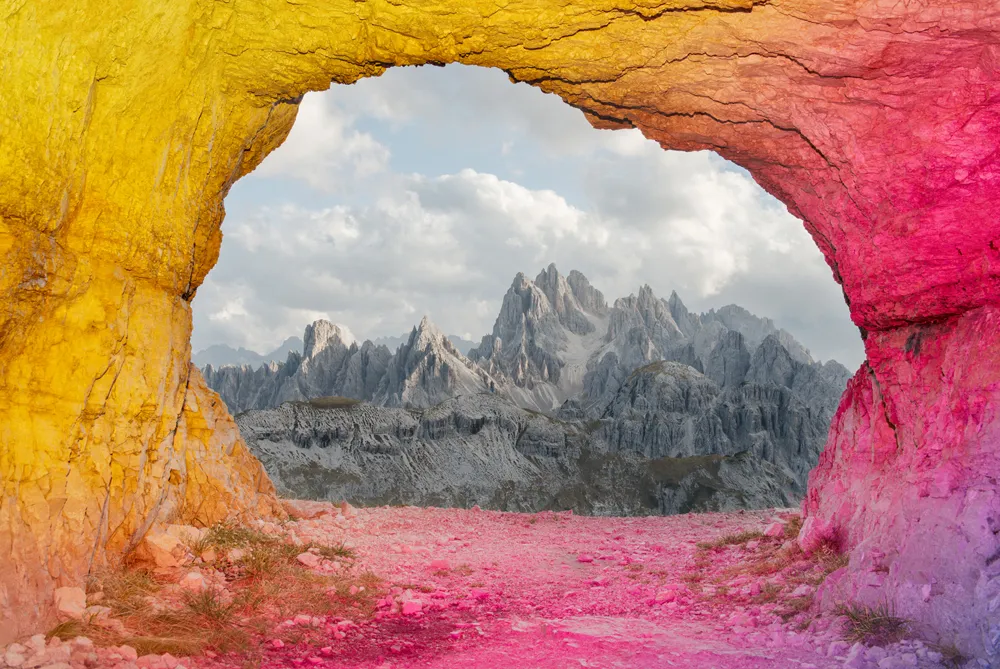
Fig.5
The book operates under a set of aesthetic and conceptual parameters. Six different sets of images work together to create a fictional world in which the physics are defined by photographic techniques. At the end of book these images are shown as a set of categories, showing side by side all of the images in each.
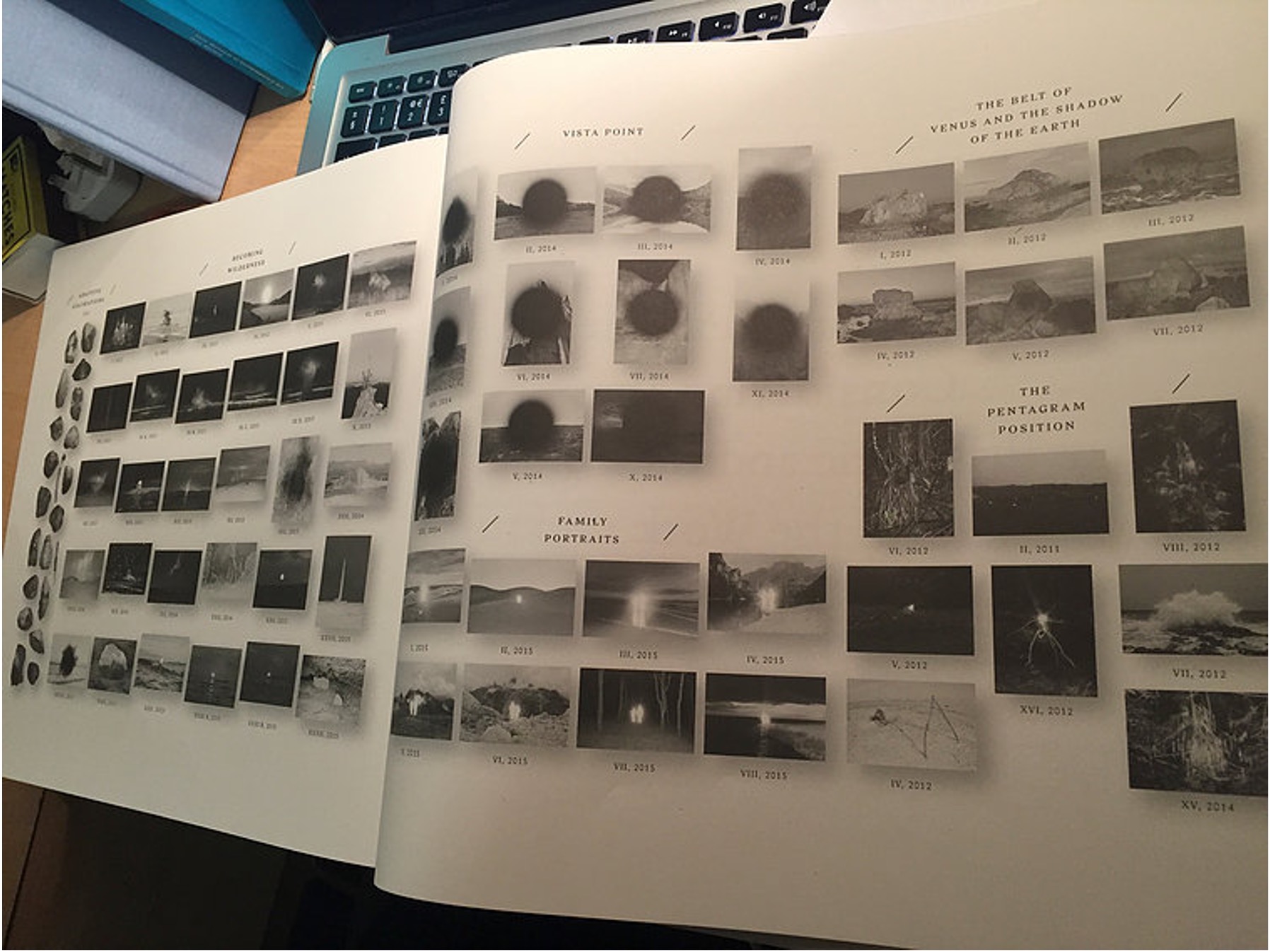
Fig.6
'All of the planning and decisions are made beforehand and the execution is a prefunctionary affair. The idea becomes a machine that makes the art.'
Images in The Belt of Venus are created by setting out key technical guidelines alongside a conceptual framework. Each collection of images conforms to its own aesthetic parameters, which when weaved together, adhere to an overall conceptual message. In the case of the photograph below the technical guidelines would be a to throw coloured powder in the air and use a flash to freeze and illuminate the powder against the sky. The conceptual message of this type of image is essentially to recreate a natural phenomenon, in this example, the sun setting behind a cloud. The conceptual importance of this act would be to explore a comparison between an artist and a god, based on the act of creating a world.
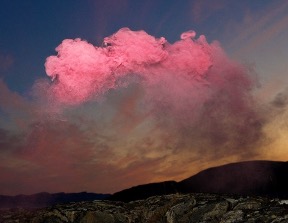
Fig.7
'What is seen in the picture was what the camera registered and could not be seen with the human eye. Again, the duo accentuates the specific functions of a camera and the essence of the photographic image. By performing small actions in consonance with nature during the exposure, such as arranging branches, throwing reflective powder to the wind or illuminating a cave with color flashes the duo detaches the photographic reality from the physical.' (Kellner, 2016)
Sol Lewitt’s ‘Paragraphs on Conceptual art’ was an early attempt at laying out the general framework and understanding of a piece of conceptual art. At the end of this essay Lewitt writes 35 short sentences on conceptual art, the first being:
'Conceptual artists are mystics rather than rationalists. They leap to conclusions that logic cannot reach.' (Lewitt, 1969)
The ambiguity that contemporary photography seems to be adopting could be attributed somewhat to a move away from the more traditional ideas and subject matter that are synonymous with street and documentary photography.
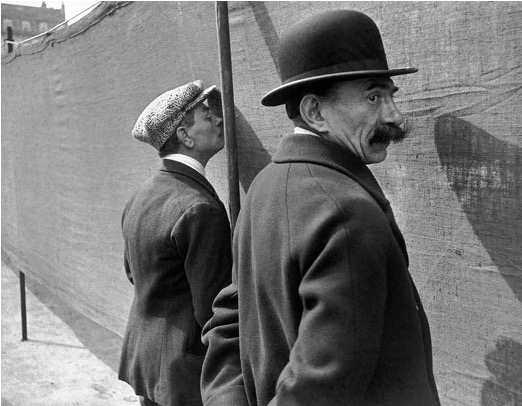
Fig.8
In contrast to this, the style of Awoska Van der Molan, could be considered to fit a more mystical defintion. Printed extremely dark, the works operate on a lack of detail. Molan’s subject matter consists almost entirely of trees, evoking feelings of nature, solitude and mystery they are resistant to any one clear interpretation. The success of an image instead relies on the successful communication of a feeling.
“I am not interested in landscape, It is a wanting to be in that state of being in nature, it’s a longing of a place where I want to be.” (Molen, 2016)
Again Molan’s work is typical of contemporary photography in that it’s made with a specific focus on process. In the case of Molan’s practice this involves shooting on large format film and making large darkroom prints using a collotype printing process from the 19th century. Given the overwhelming use of digital cameras in the mainstream, none art world, it isn’t surprising that a lot of art photographers have continued to use film. The traditional and tactile process of film photography takes the image away from the tropes of digital world, namely the ease and disposability of digital images.
As opposed to early photographic work made during the conceptual art movement which concerned itself with the communication of an idea, or more modernist works that communicated a visual experience, the contemporary photographs in this essay are all concerned with the communication of a general feeling. The ambiguity these images possess is reflective of the universal impossibility of accurately conveying a mood or feeling to someone else. A feeling is something personal to the individual and exists outside of interpretation.
In the communication of that mood through art, the end product will be a result of how the viewer reads the image on a semiotic level, as well as the aesthetic and visual strength of the image. This explains also then the focus on aesthetics present in these works. In particularly the use of colour in photography is a strong conveyer of mood, how one person reacts to a colour is often subjective to the individual’s life experience and memories of that colour. Photography in the art world today seems have encompassed the traits of the movements that came before it. As in modernism photographers are again focusing on the visual experience of an image, this has led to an embracing of the analogue aesthetic, even present in digital photography art photographers are processing images in the style of film. Through conceptual art, photography has developed into a medium that is aware of its conceptuality, photographers have now taken the meaning of their work into their own hands, whilst simultaneously allowing sufficient room for visual pleasure and a personal interpretation.
Bibliography
Campany, D. (2014). Photography, Encore. Retrieved 06 01, 2018, from David Campany: http://davidcampany.com/photography-encore/
Jones, J. (2014, 11 13). Flat, soulless and stupid: why photographs don’t work in art galleries . Retrieved 06 02, 2018, from The Guardian: https://www.theguardian.com/artanddesign/jonathanjonesblog/2014/nov/13/why-photographs-dont-work-in-art-galleries
Kellner, T. (2016, August 29). The Belt of Venus and the Shadow of the Earth. Retrieved 06 03, 2018, from Inka And Niclas: http://inkaandniclas.com/info/the-belt-of-venus-and-the-shadow-of-the-earth/
Lewitt, S. (1969, May). Paragraphs on Conceptual Art. Retrieved 06 04, 2018, from Corner College: http://www.corner-college.com/udb/cproVozeFxParagraphs_on_Conceptual_Art._Sol_leWitt.pdf
Molen, J. F. (2016, 04 26). Blanco: Silent Landscapes. Retrieved 06 05, 2018, from Lens Culture: https://www.lensculture.com/articles/awoiska-van-der-molen-blanco-silent-landscapes
Plummer, S. (2014). Conceptual Photography. Source , 25.
Ravich, W. M. (Director). (2015). Lucus Blalocks Toolkit [Motion Picture].
SIMCHAK, C. (2015). The Belt of Venus And The Shadow of the Earth Inka & Niclas Lindergård. Retrieved 06 03, 2018, from New Found: https://newfound.org/archives/volume-7/issue-2/visual-arts-inka-niclas-lindergard/
Soutter, L. (2012). Conceptual Photography. Source .